LONDON — A lot has changed in Ethiopia since hundreds of thousands of people died in the famine of the mid-1980s. Rates of undernourishment have plummeted in the past 25 years, child mortality is down by two-thirds and 90 percent of children go to primary school.
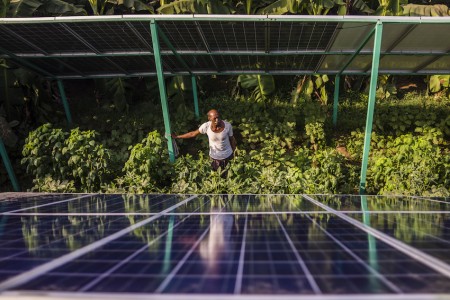
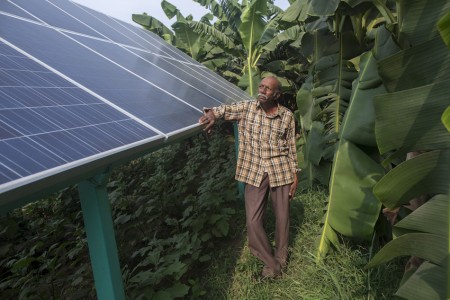
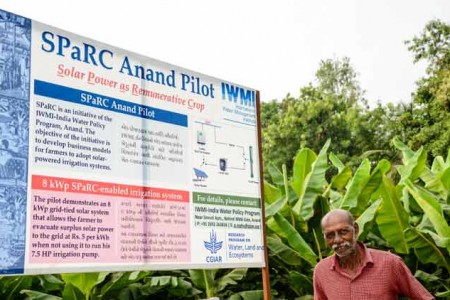
Gandhinagar: An ordinary farmer Ramanbhai Parmar based in Thana village of Anand District has become the torchbearer for other agriculturists. Parmar who opted for solar power-based irrigation plant in his farm has earned Rs7,500 extra by selling the surplus power he generates apart which is over and above the income he earns from his farm produce.
Raman Parmar was handed over a cheque of Rs 7500 for the 1500 units of surplus power that was produced in his farm and was fed to the electricity grid during the last four months.
Too often, groundwater supplies are over-exploited, which can not only reduce food production but also negatively impact other ecosystem services such as the quantity and quality of drinking water.
To consolidate best practices, research methods, and tools into a sourcebook on Water Smart Agriculture (WASA), experts recently gathered at a writeshop in Woliso, Ethiopia, Oct. 27-31st 2014.
In May 2014, the Global Water Initiative East Africa together with WLE and it's lead center, the International Water Management Institute, convened a regional workshop on Transformations in Water for Smallholder Farmers in East Africa – towards a ‘Water-Smart Agriculture’ Learning Hub.