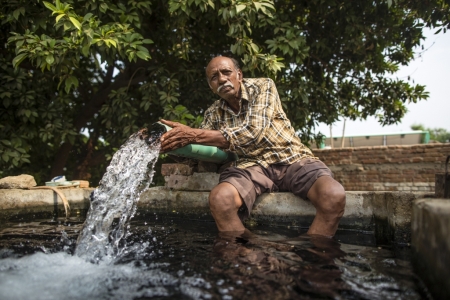
There is a growing global consensus about the critical importance of groundwater for sustainable development and climate change adaptation. The World Economic Forum, in its Global Risks Report 2019, stresses for the first time that depletion of this critical resource is causing megacities to sink, with significant risks to water security and resilience, while also threatening food production systems.
Following the successful debut of index-based flood insurance (IBFI) in India’s Bihar State during 2017, the International Water Management Institute (IWMI) and its partners have continued their search for ways to make this tool more effective in helping farm families manage disaster risk. Bihar is the country’s most flood-prone state, with about 40 million hectares subject to periodic flooding.
IWMI/WLE contributed to and ran sessions at the 13th International Conference on Dryland Development, brought together national and international stakeholders to discuss sustainable dryland development under the theme “Converting Dryland Areas from Grey into Green.”
IWMI director general Claudia Sadoff was a guest of honor, addressing the inaugural session and also making a plenary presentation titled ”Water security and sustainable growth in the drylands.”
IWMI and ICAR organized a mini symposium during the conference to foster knowledge exchange among researchers on the present status and future prospects of water productivity in the drylands. The symposium aimed at framing a strategy to boost water productivity and mainstream it in drylands at scale through appropriate institutional frameworks and policies
Alok Sikka co-chaired a technical session on “Soil Health Management, Carbon Sequestration and Conservation Agriculture.”
Tushaar Shah presented on groundwater governance challenges in arid areas. Alok and Tushaar also presented at sessions related to water harvesting and water productivity.
More than 300 actors, including technicians and decision makers from six departments in western Honduras (Copán, Intibucá, Lempira, La Paz, Ocotepeque, and Santa Bárbara), have benefited from the Honduras Water platform [Agua de Honduras], co-developed by CIAT’s Agroecosystems and Sustainable Landscapes (ASL) and Decision and Policy Analysis (DAPA) research areas.
A first of its kind, the Honduras Water platform facilitates decision making on water management. Over 300 actors have benefited from this CIAT and the Government of Honduras co-developed program.
A collection of opportunities for researchers working on sustainable agriculture issues: grants, workshops, journal calls, and related notices. Learn how to join the Thrive Network for Sustainable Agriculture Researchers.
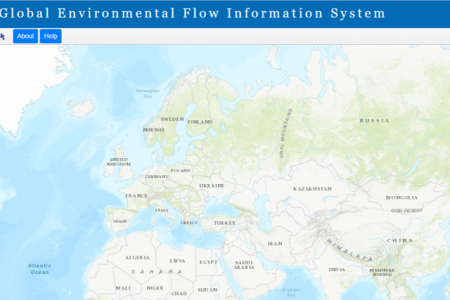
At a dedicated event at FAO Headquarters today, the FAO Land and Water Division launched new Guidelines for a minimum methodological standard for global reporting on how to incorporate environmental flows into SDG “water stress” indicator 6.4.2.
Colombo is one of the first 18 cities that has been accredited as a Ramsar Wetland City at the 13th meeting of the Conference of the Parties to the Convention (COP13) held in Dubai, United Arab Emirates on October 25, 2018.
The case for adopting climate-smart agriculture practices – which can improve productivity, build resilience and reduce emissions – has been underlined by a series of events at the United Nations climate talks in Poland. Via WLE and IWMI.