One-third of carbon emissions are absorbed by the earth’s biosphere. After forests, agricultural lands and wetlands have the most potential to do this. A panel of experts convened at COP24 last week to discuss ways in which this potential can be realized.
Study after study has shown that a lack of affordable credit to purchase pumps is the number one reason why more farmers in sub-Saharan Africa don't adopt irrigation. Until farmers find a way around it, there is a danger that the emerging revolution in smallholder irrigation could stall.
At the CSA Investment Advantage event, part of the larger Agriculture Advantage 2.0 event series at COP24, participants discussed ways to identify best-bet CSA technologies and practices for investment.
At the CSA Investment Advantage event, part of the larger Agriculture Advantage 2.0 event series at COP24, WLE/IWMI and others discussed ways to identify best-bet CSA technologies and practices for investment.
The Policy Advantage event, part of the larger Agriculture Advantage 2.0 event series at COP24, brought together WLE/IWMI and other diverse perspectives on the policy change needed for food systems transformation.
A new report by the United Nations University (UNU-INWEH) analyzes the interlinkages between groundwater and the Sustainable Development Goal (SDG) targets. The SDGs of the 2030 Development Agenda do not, as a rule, account explicitly for groundwater, but it is clear that groundwater already plays and will continue to play a significant role in sustainable development. The report suggests a structured way to improve the visibility of groundwater in the SDG framework as it continues to develop.
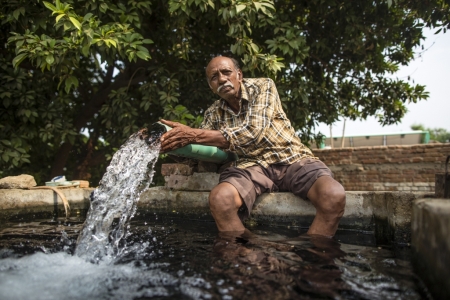
Raman Parmar, 48, a farmer of Thamna village Gujarat’s Anand district had become the country’s first solar power farmer. By connecting a solar powered irrigation pump to an electricity grid, Raman had received the first payment for his ‘solar crop’ in the form of a cheque of Rs 7,500 from the International Water Management Institute (IWMI).
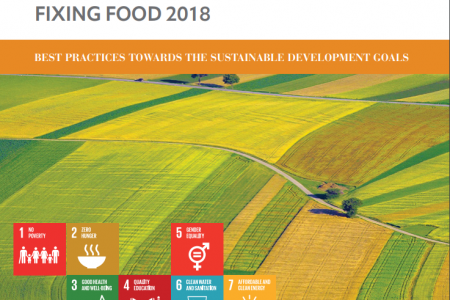
Changes to farming systems require managing trade-offs—many of which have not yet been considered, according to IWMI/WLE senior researcher Soumya Balasubramanya in the new Economist report Fixing food 2018: best practices towards the sustainable development goals.
The 2017 CGIAR annual report features some success stories from WLE, including the establishment of a new Sri Lankan sanitation policy that turns septic waste into a resource, and the work of the Groundwater Solutions Initiative for Policy and Practice (GRIPP) in promoting sustainable groundwater use. The WLE publication, Global Sequestration Potential of Increased Organic Carbon in Cropland Soils, was also featured.
With over 6.5 million shallow tube wells in Nepal, India, and Bangladesh, the Ganga basin is one of the most densely plumbed aquifer systems in the world. More than 80% of farmers depend on these wells. But affordable electricity or solar pumps could wean farmers from canal irrigation, leaving more water to flow in Ganga and its tributaries, without adversely affecting hydropower.
In Today.AgriLife.org, the International Water Management Institute's partner Texas A&M receives funding for Feed the Future Innovation Laboratory for Small Scale Irrigation project.
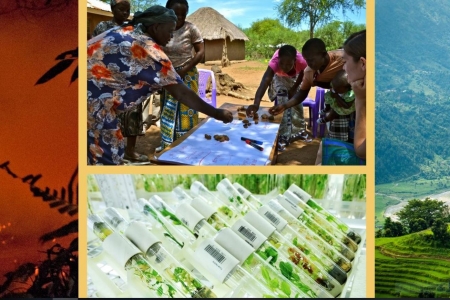
A special ‘Synthesis’ issue that collates research outputs from participating CGIAR centers was one of the key action points discussed at a workshop on Land and Water Solutions (LWS) – Flagship 2 of the CGIAR Research Program Water, Land and Ecosystems.