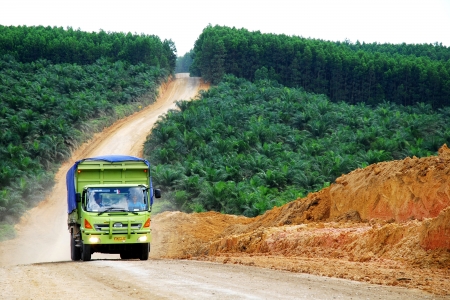
The intensification of agriculture has had devastating environmental consequences; however, as the earth's population increases, productivity must increase as well. As a recent WLE-funded paper argues, agroecological intensification (AEI) provides a promising way forward for both agricultural productivity and ecosystem health.
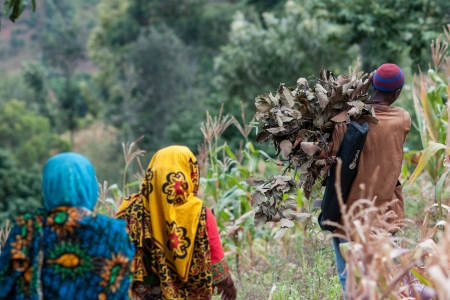
Smallholder farms and large industrial farms are equally damaging to their ecosystems if they are monocropped. That said, shifting away form monocropping isn't only beneficial for ecosystems: it has economic rewards as well.
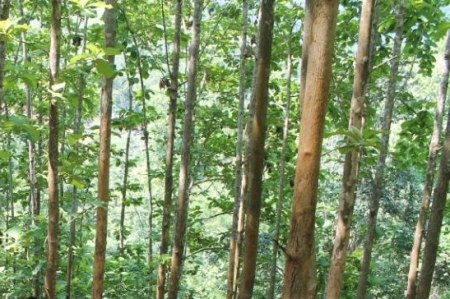
A recent research publication covering two similar catchments in upland Laos and upland Vietnam found a striking different hydrological situation in each place. What accounts for the difference, and what are the implications for forest management policy?
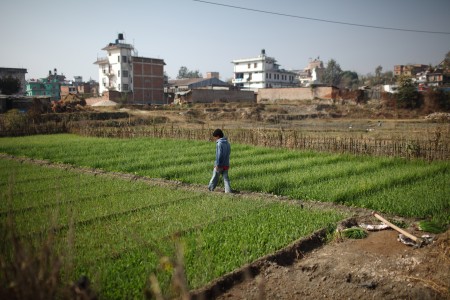
Ecomodernism embraces agricultural intensification as one of the primary means of decoupling humanity from the environment. However, ecomodernism relies on some problematic assumptions about the division between humanity and nature and the nature of human use of rural spaces.
Acquatic biomonitoring is a powerful tool for assessing the health of river systems. On a recent trip to Myanmar, IWMI researchers explored the viability of biomonitoring for evaluating the health of the Ayeyarwady and Thanlwin rivers.
Landscape restoration is in urgent need of private capital, as identified at the GLF—The Investment Case meeting in London. What are the barriers to business investment in landscape restoration, and how might organizations like CGIAR play a role in overcoming those barriers?
People need food, but just increasing agricultural yields in an effort to "feed the world" can be harmful to people and the environment. What needs to happen to make food security more holistic and sustainable?
Manythong Siharath is worried. The wetland she depends on for her livelihood is changing and changing fast! In recent years, fishing has become a lot harder and her income has dropped significantly. She like many others around the world faces a shrinking wetland while her problems only continue to grow.
Ecosystem services is a term that does not translate easily into different languages, making it difficult to explain across cultures and contexts. The challenge becomes even more daunting when we want to understand how local communities use, perceive and value different ecosystem services: how can we collect views from others on a concept that is described by an amalgam of financial, conservation, regulatory and scientific parlance?
Here’s a spin on what caught our eye this month. From the TEEBAgFood interim report released at the Global Landscapes Forum in Paris to the Indonesian peat fires to microbes and ecosystem service bundles. Read on!