Here’s what has grabbed our attention in the research literature on Ecosystem Services and Resilience over the past few months. What has biodiversity done for you lately?
We’ve been engaging increasingly with the health sector to explore the relationship between biodiversity, environmental health and human well-being. Read on as we highlight some of the articles that have been influential at this intersection.
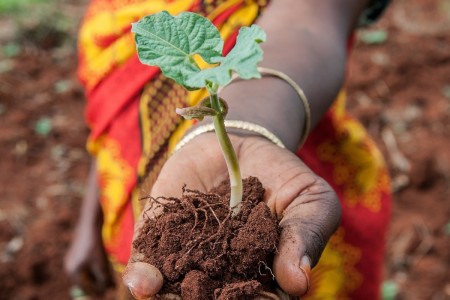
The latest episode of the Thrive podcast takes a close look at the ground beneath our feet. Soil, on which terrestrial life depends, is often ignored precisely because it is everywhere and yet invisible.
The Nairobi-Tana Water Fund comes at a time when water is more expensive than fuel for the majority in Nairobi; when more valuable topsoil is washed away in Noachian proportions; and when available science predicts radical shifts in climate. There is little scope left for debate and conjecture.
It is no coincidence that we're launching the Thrive podcast today, World Environment Day. The theme this year is sustainable consumption and production, and that's exactly what drives the podcast's first guest: Andrew Noble, Director of the CGIAR Research Program on Water, Land and Ecosystems.
Climate science has a large interest in ‘average weather’. There is an obsession with predicting larger climate trends: regional long-term patterns of rainfall, temperature peaks and averages. How this pans out locally in time and space in less understood.
What are we to make of the proliferation of water funds around the world? Now there’s a question. Would they still be growing in number if they weren’t delivering tangible impacts? Many interventions lack fundamental scientific principles to support them, so the answer in some cases may well be yes. Which is why it is vital that they get the science right.
When experts in large-scale irrigation systems hear the phrase ‘ecosystem services based approach’, their responses represent an array of contrasting perspectives on what is - or should be - an environmental service perspective and how it can be used. Two researchers react to ‘ecosystem services based approach’.
What are we to make of the proliferation of water funds round the world dedicated to maintaining the watersheds that keep rivers flowing, aquifers charged and taps full? Should we embrace the engagement of some of the world’s most famous water guzzlers?
Development practitioners are faced with a conundrum: how to measure results, and satisfy donors’ and funders’ demand for impact reporting, when the typical three-year development project has long expired by the time impacts emerge?
Researchers from the Technical University of Madrid, the International Food Policy Research Institute (IFPRI) and Harvard University have just published a paper in PLOS ONE which jointly assesses issues of future global food security and environmental outcomes. The study describes different future agricultural production pathways in one of the most important food baskets of the world: Latin America.
The Tana-Nairobi Water Fund is a public-private scheme uniting big business, utilities, conservation groups, government, researchers and farmers. It aims to increase farm productivity upstream, while improving water supply and cutting costs of hydropower and clean water for users downstream, and is designed to generate US$21.5 million in long-term benefits to Kenyan citizens, including farmers and businesses.