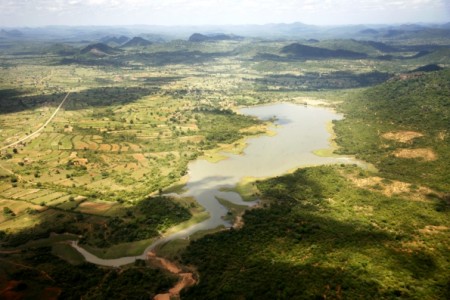
Inland fisheries are being overlooked in policy, management and development decisions, which is ultimately undermining the vital food and livelihood benefits they provide to the poor.
Severe flooding and drought caused by extreme weather patterns lead to about 10,000 deaths and US$40 billion in damage a year, with the number and extremity of the events is slated to increase in the future. The agricultural sector is particularly vulnerable.
Our partners at the International Food Policy Research Institute (IFPRI) have contributed to a new paper published in Science that shows that increasing irrigation efficiency through irrigation technologies alone is failing to reduce water consumption and, paradoxically, may even be making water scarcity worse.
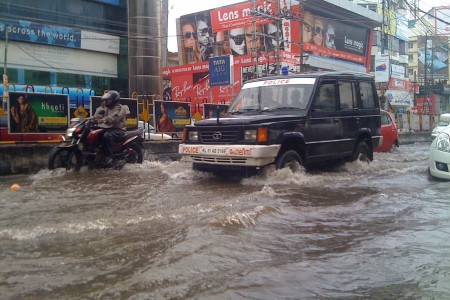
As severe floods hit India’s Kerala state, satellite maps produced by IWMI and WLE are supporting the state government’s relief efforts by helping to estimate water inundation.
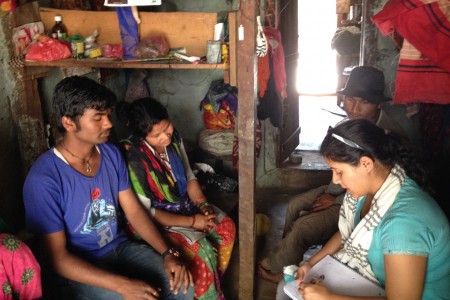
A trip along the Karnali river, where a major hydro electric project is planned, showcases how different communities are impacted, and who can negotiate, and who cannot.
A hydropower dam failure in Southern Laos has destroyed villages and left many homeless or dead. WLE and IWMI researchers are offering assistance to the flood relief efforts.
By Claudia Sadoff for the Telegraph. Malaria research is currently focused on new methods of genetic mosquito manipulation but the way large dams are currently built and designed creates massive mosquito breeding grounds, adding to the disease burden. Changing dam design is a significant and neglected area of opportunity.
If asked where their water comes from, a local might point to Sundarijal or to the water tankers hurtling down Kathmandu’s roads carrying loads from distant springs and wells. But where does the water in Sundarijal come from? And how do these springs and wells stay filled with water all year round?
By Hua Xie and Claudia Ringler of IFPRI. The number of food-insecure people in Africa South of the Sahara remains unacceptably high and is set to increase as a result of climate change and weak agricultural and economic growth. According to the 2018 Global Food Policy Report, an additional 38 million people are projected to be at risk of hunger in 2050 as a result of climate change-induced slowdowns and disruptions in agriculture in the region—25 percent more than would be at risk in the absence of climate change.
When corporations run aground, the internal auditors are among the first to take the blame. By the same token, when a water crisis hits, the first question to ask is whether the places affected have their “water accounting” in order. The importance of the concept for effective water governance is the key message of a side event being held at the 8th World Water Forum this week in Brasilia, Brazil.
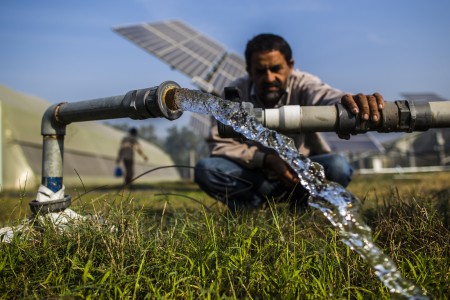
With nearly 30 million wells having sprung up during the last half century, India is a global hotspot of groundwater use. This book offers a window into the prevailing challenges and promising opportunities in the water sector in India. A review for the GRIPP network by Shailendra Nath Dwivedi of the Central Ground Water Board, Ministry of Water Resources, RD& GR, Govt. of India