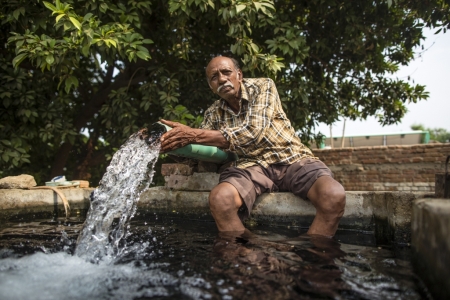
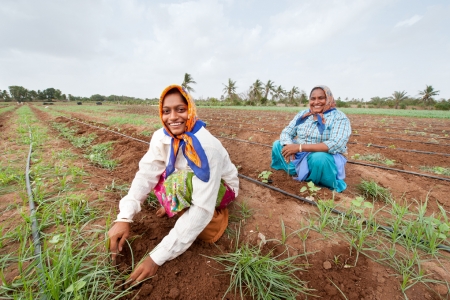
There is a growing global consensus about the critical importance of groundwater for sustainable development and climate change adaptation. The World Economic Forum, in its Global Risks Report 2019, stresses for the first time that depletion of this critical resource is causing megacities to sink, with significant risks to water security and resilience, while also threatening food production systems.
Following the successful debut of index-based flood insurance (IBFI) in India’s Bihar State during 2017, the International Water Management Institute (IWMI) and its partners have continued their search for ways to make this tool more effective in helping farm families manage disaster risk. Bihar is the country’s most flood-prone state, with about 40 million hectares subject to periodic flooding.
A first of its kind, the Honduras Water platform facilitates decision making on water management. Over 300 actors have benefited from this CIAT and the Government of Honduras co-developed program.
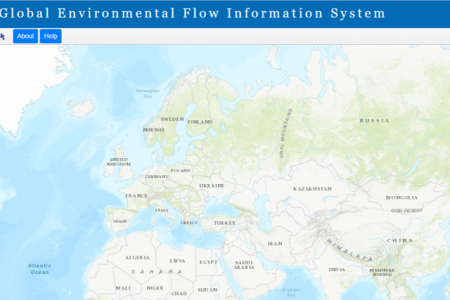
At a dedicated event at FAO Headquarters today, the FAO Land and Water Division launched new Guidelines for a minimum methodological standard for global reporting on how to incorporate environmental flows into SDG “water stress” indicator 6.4.2.
At the CSA Investment Advantage event, part of the larger Agriculture Advantage 2.0 event series at COP24, participants discussed ways to identify best-bet CSA technologies and practices for investment.
At the CSA Investment Advantage event, part of the larger Agriculture Advantage 2.0 event series at COP24, WLE/IWMI and others discussed ways to identify best-bet CSA technologies and practices for investment.
A new report by the United Nations University (UNU-INWEH) analyzes the interlinkages between groundwater and the Sustainable Development Goal (SDG) targets. The SDGs of the 2030 Development Agenda do not, as a rule, account explicitly for groundwater, but it is clear that groundwater already plays and will continue to play a significant role in sustainable development. The report suggests a structured way to improve the visibility of groundwater in the SDG framework as it continues to develop.
Against a backdrop of worsening vulnerability to climate-related risks in India’s agriculture, the International Water Management Institute (IWMI) is launching a mobile app, called AgRISE, in support of a new national agricultural insurance scheme.
The collapse of a dam in southeastern Laos triggered massive flooding that killed dozens and displaced thousands of people, bringing a renewed focus on hydroelectric dams in mainland Southeast Asia. In an email interview, Diana Suhardiman, a senior researcher at the International Water Management Institute, discusses the trade-offs associated with large-scale dam projects.
A hydropower dam failure in Southern Laos has destroyed villages and left many homeless or dead. WLE and IWMI researchers are offering assistance to the flood relief efforts.