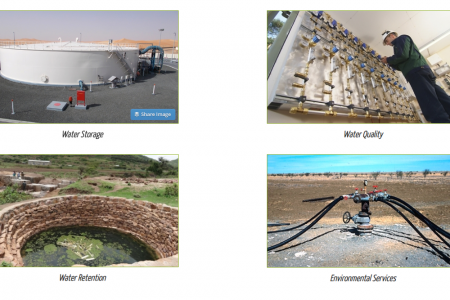
Launched this year at Stockholm World Water Week, GRIPP has curated over 20 solutions for Groundwater-Based Natural Infrastructure, or GBNI, contributed from experts around the world. Groundwater is natural capital, and if managed properly, can provide resilience and water security in the face of future changes. Check out some case studies and learn more about the solutions on the new GRIPP platform.
Dr. Petra Schmitter at the International Water Management Institute (IWMI) and WLE leads a pilot project that could revolutionize farming in Myanmar's Central Dry Zone, one of the most food-insecure regions in the country.
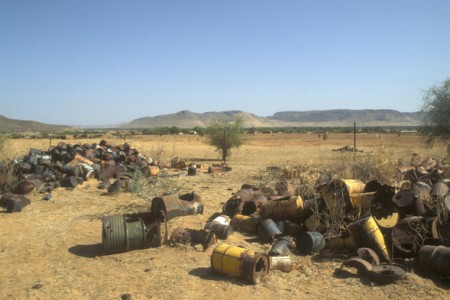
WLE contributed to a new report by the FAO and IWMI showing water pollution from unsustainable agricultural practices poses a serious risk to human health and the planet's ecosystems, a problem often underestimated by policy-makers and farmers.
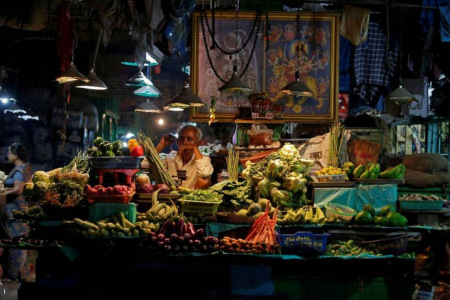
IFPRI/WLE Researcher Wei Zhang's op-ed in Thompson-Reuters Foundation News explains how the failures of our food system won’t be solved overnight, but if we don’t strive to address the whole system, we are more likely to fail in tackling any individual piece of it.
In 2015, UN Member States adopted the historic 2030 Agenda, setting universal and transformative goals and targets, and committing to working tirelessly for their full implementation. To ensure that no one is left behind, it will be vital to track progress towards the goals.
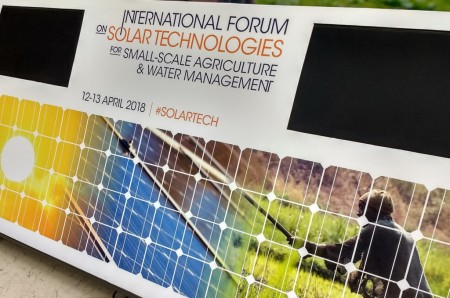
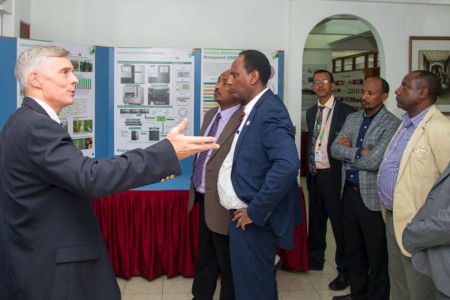
The International Forum on Solar Technologies for Small-scale Agriculture and Water Management was held at FAO Headquarters in Rome in April 2018, looking at the opportunities to benefit from solar technology by small-holder farmers, while also discussing some of the challenges and potential pitfalls associated with financing, implementing and regulating this rapidly growing sector.
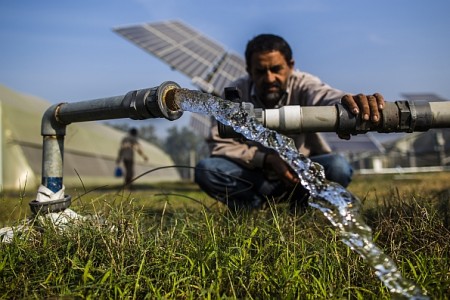
From project partners Future Pump. Solar irrigation has many benefits, both environmentally and socially, and while there is the potential to over extract groundwater, the private and public sectors should work together to make sustainable solar irrigation a reality.
Coffee is a major export of Vietnam, but the highlands where about 40% of the coffee is grown, is experiencing water shortages in the dry season. Research has found that yields can be increased while decreasing water consumption, and irrigation practices can be improved.
A high-level ministerial delegation from Ethiopia was in Telangana, India, to find solutions for rain water management and nutritional security. The visit was jointly hosted by ICRISAT and the Telangana Ministry of Irrigation.
How solar irrigation in Bihar has helped double yields.
At a time when farmers across India are in distress, solar power-irrigated agricultural fields at Chakhaji village in Pusa block, Samastipur, Bihar, are lush green. Standing resplendently are bumper crops of peas, tomatoes, a variety of vegetables and tobacco. Since the solar power irrigation project was launched towards the end of 2016, dividends have been good. There is no more dependency on the polluting diesel pump sets or the vagaries of State electricity to pump water into the fields. Solar panels herald improved irrigation, carbon-free air and increased earnings for farmers.
Scientists and government officials are collaborating with communities to test out new approaches to reversing land degradation—methods that might have potential to change the status of the entire highlands region from vastly degraded to successfully restored.
While many farmers consider solar technology to be expensive and technically complex, they tend to change their tune, once they get a chance to try it out for themselves.