Water experts estimate that only 4 to 7 percent of arable land is irrigated in Sub-Saharan Africa (SSA), the lowest ratio across the world. A new special series on small-scale communal irrigation in South-Eastern Africa is calling for donors to develop a viable, sustainable and inclusive business model for small-scale public irrigation schemes in Sub-Saharan Africa.
In the first phase of the Africa RISING project in the Ethiopian highlands, IWMI investigated technologies that could improve farmers’ access and use of the available water in their surroundings for better agricultural production and productivity.
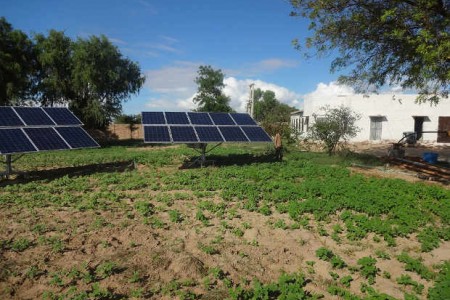
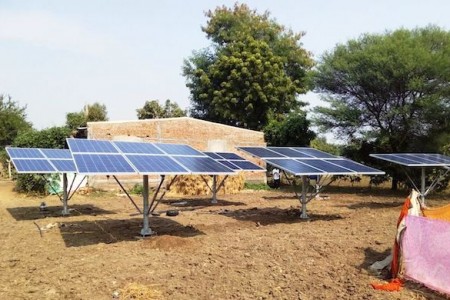
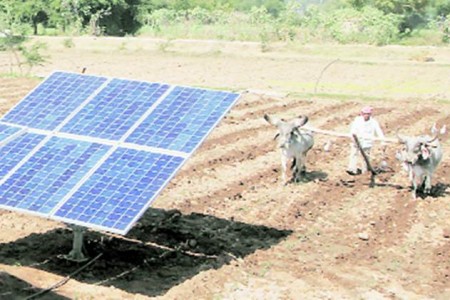
Dhundi, Kheda district, Gujarat: Phodabhai Parmar, a 72 year-old farmer, sits on a charpai sipping tea as solar panels gleam in the fields behind him. Parmar is one of six farmers who have formed the world's first solar irrigation cooperative in Dhundi village in Gujarat's Kheda district, about 90km from Ahmedabad.
A farmers’ cooperative in Gujarat using solar-powered water pumps is showing the way to optimal irrigation and generating additional income by selling surplus electricity.
Meeting the Sustainable Development Goals on hunger and poverty will require a 50 percent increase in food production in the next 15 years. In fact, a global food revolution is urgently needed, argues a recent paper by a number of leading scientists working with WLE.
The cooperative that holds the distinction of being the world’s “first solar irrigation cooperative” was felicitated for providing its members “smart income” from energy sales to a local discom.
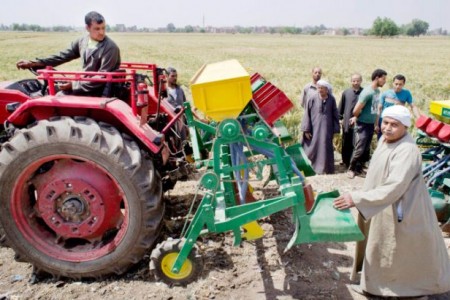
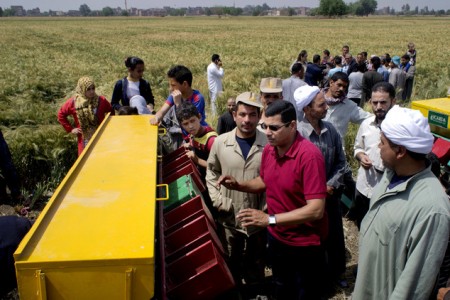
Egyptian farmers use a plow developed by Atef Swelam, not pictured, the scientist who developed the plow on behalf of the International Center for Agricultural Research in the Dry Areas (ICARDA), on a land in Kafr Hamouda village, in Zagazig, 63 miles (100 kilometers) northeast of Cairo, Egypt. The plow could one day help Egypt alleviate water shortages that threaten to cripple the Arab world’s most populous country in the next decade.
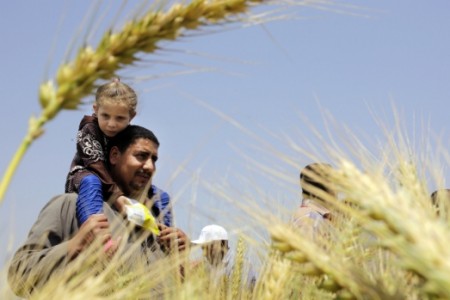
"For a thousand years," Abdullah Sheikh's family has been working the land the same way - flooding fields in Egypt's Nile Delta and planting seeds by hand. But now a small, relatively cheap plow has changed all that, allowing him to nearly double the yields of his two acres of wheat, arranging it in neat, raised beds with smaller furrows that require a third less water.
"For a thousand years," Abdullah Sheikh's family has been working the land the same way — flooding fields in Egypt's Nile Delta and planting seeds by hand. But now a small, relatively cheap plow has changed all that, allowing him to nearly double the yields of his two acres of wheat, arranging it in neat, raised beds with smaller furrows that require a third less water.