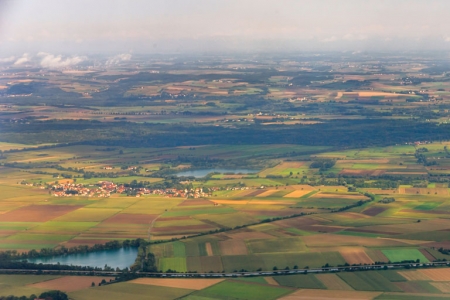
Agricultural landscapes are the most important solution space for addressing Sustainable Development Goals on environment and food security. The ESR framework can help tackle the complexity of these landscapes so that the right research and interventions can be designed and carried out.
In the Mekong Delta, intensive farming practices have taken their toll on fish and aquatic populations. Farmers are working with researchers to try and reverse this worrying trend.
Responding to a demand from local decision makers, researchers have developed a water allocation model that can shed light on current and future water availability in the Ruaha watershed in Tanzania.
Users of wetlands in the Nile River basin are increasingly confronted with tough trade-offs, as wetland areas become overexploited, deteriorate and ultimately fail to provide the benefits that communities and ecosystems depend on.
In the Gash Spate Irrigation Scheme of Sudan, farmers are able to cultivate watermelon as a second crop in the end of October – long after the rains have fallen and the floods have been diverted. So where does the water come from?
The Nile Water Lab is a new web platform that presents a wide range of views on irrigation projects along the Nile, both views from people on the ground and views that are usually hidden away in policy reports and journal articles.
The recurrent threat of both flooding and drought looms large over many parts of the Mekong region. This variability is natural but is increasing due to climate change. Their destructive effects can be either relieved or compounded depending on the way dams are operated.
Meeting the Sustainable Development Goals on hunger and poverty will require a 50 percent increase in food production in the next 15 years. In fact, a global food revolution is urgently needed, argues a recent paper by a number of leading scientists working with WLE.
Over the course of a decade, half the spring water in the Indian state of Sikkim disappeared. No one is sure why this is happening. Climate change may be having an influence, along with other factors. But how can we find out more about the springs’ hydrology?
On 14 June 2016, a roundtable discussion on placing sustainability at the heart of agricultural development was held at UNESCO-IHE. The aim was to identify future solutions and collaborative opportunities that support a transition to sustainable intensification of agricultural systems for poverty alleviation and livelihood improvement.