The causes of migration are complex. And while climate extremes can undermine economic systems and harm vulnerable communities, there's a lot more we should be considering, too.
Mismanagement of groundwater threatens our drinking water, food production, and climate change adaptation prospects, warns a statement signed by 700+ global experts.
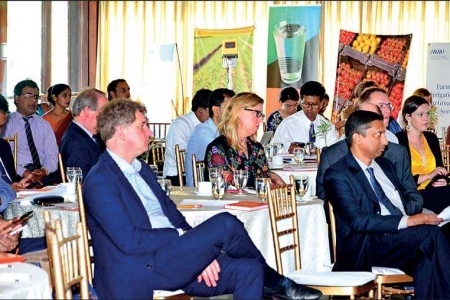
IWMI joined the Netherlands Embassy on Nov. 28 in Colombo to discuss the impact of climate change on agricultural production and the food supply chain.
Index-based Flood Insurance (IBFI) developed by IWMI and partners including WLE, is giving smallholder farmers in climate-related disaster prone regions a new lease of life, as well as a win-win for government and private sector.
A collection of opportunities for researchers working on sustainable agriculture issues: grants, workshops, journal calls, and related notices. Learn how to join the Thrive Network for Sustainable Agriculture Researchers.
First-of-its-kind Beta tool Aqueduct™ Food (Beta) by WRI overlays IFPRI/WLE’s crop and food security data with Aqueduct's widely-used water risk indicators to identify global trends and hotspots.
IWMI/WLE's groundwater expert Karen Villholth sits down with FutureEarth. "When we look at transboundary aquifers, many of them are connected to surface water so we cannot address them separately – we need to understand the whole system."
New opportunities for entrepreneurs in the circular economy are coming out of turning waste into wealth. A compendium of business models is being adopted by curricula in 19 universities in Asia, Europe and Africa.
Community water management investments in Tajikistan are now better targeted to women, with an aim to increase food production and stabilize farming systems.
New soil strategies, water technology, policy initiatives and advances on restoring degraded landscapes are bringing cross-sectoral and cross-scale results in Ethiopia's agricultural sector.