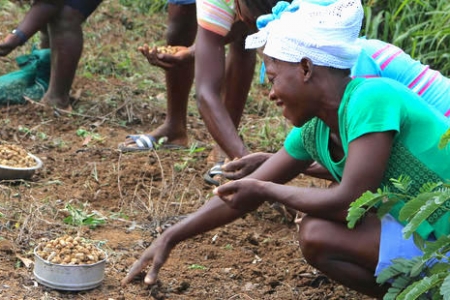
A recent study by IFPRI supported by WLE came up with key insights in the role of women’s empowerment for soil health that can be directly incorporated into improved soil health management.
Study estimates staggering volumes of growing urban wastewater globally that hold vast environmental and economic potential in terms of soil nutrients and clean energy
Over a 1000 scientists called to action the need to adopt sustainable groundwater practices. This story by Truthout amplifies the message: groundwater is an “urgent and long-term concern” globally that is as critical as - and intricately connected to - the climate crisis.
ICAR-India and IWMI launched a study into post-flood crop management and index based flood insurance (IBFI) in Bihar and Odisha, which aims to develop flood resilient agricultural practices and adaptation measures, among other strategic benefits.
Three new policy briefs from WLE demonstrates with recommendations how satellite-based insurance can strengthen disaster management, gender equity and institution led social inclusivity
IWMI/WLE E-flow online tool helps national planners in countries like Nepal to proactively balance water use needs and ensure sustainable use of freshwater
Seventeen African countries are now using soil–plant spectral technology to restore soils and boost agricultural production, food security and livelihoods.
IWMI study in Jordan finds that managing groundwater in the MENA region needs to extend beyond adopt water-saving technologies to address farmers' irrigation-related behaviors, practices and beliefs about groundwater.
Collaboration with Ethiopian institutes on systems-based research programs were discussed during a recent visit to Ethiopia by Dr Peter Carberry, Director General, ICRISAT
Using these new decision analysis approaches scientists can more realistically model scenarios for agricultural development and natural resource management in the context of climate change mitigation.
IWMI leads a Call to Action of over 700 scientists, managers and development actors to manage and conserve the world’s groundwater supply by 2030. The Call features three agenda items.