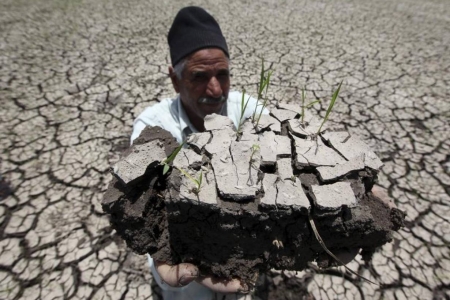
As many as five billion people will face hunger and a lack of clean water by 2050 as the warming climate disrupts pollination, freshwater, and coastal habitats, according to new research published last week in Science. People living in South Asia and Africa will bear the worst of it.
How small-scale communal irrigation schemes are being transformed into profitable, equitable and economically sustainable schemes through investment in smart technologies, farmers, institutions and value chains.
Practical, multi-pronged interventions helped struggling farmers in Jhansi district to diversify and intensify crop production through agroforestry, and now it's being scaled-up to seven districts.
Effective forest and landscape restoration interventions need to take into account socio-political aspects and gender norms in order to ensure long-term impact and promote equitable sharing of benefits.
Public, private and academic actors, including CCAFS and WLE, comes together to offer a suite of solutions, that will gear smallholders to prepare for a new climate era.
The work would influence the development of novel policies supporting carbon capture, improved water quality, habitat and connectivity for biodiversity and more, whilst recognizeing those services that benefit agriculture.
A huge benefit to smallholders, as it quickly and cost effectively measures and maps soil and plant properties, also matching soil problems with solutions.
In the struggle to produce more food, and on increasingly degraded lands, access to reliable and contextual information can help farmers make better informed decisions.
Following the success in experimental games to develop better groundwater management among farmers in Andhra Pradesh, now the tool is extending across India.
Understanding the availability of fresh water - through science - is helping reduce "water stress" and aiding decision-makers in Nepal to balance ecological and socio-cultural needs.
The Plan is the result of a four-year study conducted by WLE/IWMI aiming to enhance policies and optimise the potential of groundwater resources in Laos.
As millions of people across the world show their commitment to zero hunger and healthy diets, one crucial piece of the puzzle must not be forgotten: water.