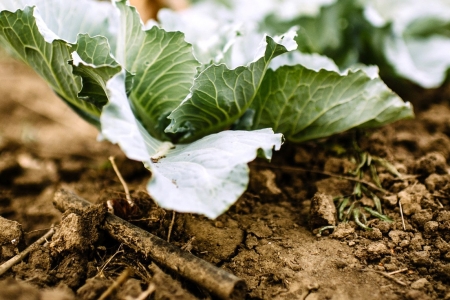
Faster, cheaper and more precise than conventional testing, soil spectroscopy analysis gives giving agricultural producers at all scales vital information on how to improve and protect their soils.
12 useful indicators spanning governance, equity, food, and the circular economy, support the city to develop inclusive and resilient sustainable food systems.
Socio-hydrological models enable potential future scenarios to be explored, depending on varying circumstances, and capture how institutions and policies could help halt water pollution, a growing problem in the country.
Improved evidence base and systems thinking approach would help promote the benefits of Nature Based Solutions and evaluate the true cost of traditional grey infrastructure investments, which actually contribute more to economic fragility than economic growth, if environmental and social costs are properly accounted for.
An evaluation finds real change in three specific areas: demonstrating landscape approaches in ways that encourage farmers, the government, donors and NGOs to embrace these strategies; innovating with geospatial data; and promoting and removing barriers to conservation technologies.
CGIAR unequivocally condemns and rejects racism. We believe that diversity is our strength. It drives better science and innovation. It is what makes us who we are.
A collection of opportunities for researchers working on sustainable agriculture issues: grants, workshops, journal calls, and related notices. Learn how to join the Thrive Network for Sustainable Agriculture Researchers.
Claudia Ringler, the Deputy Director at IFPRI, and WLE co-lead for Managing Resource Variability and Competing Use shares her experiences while working in the Nexus field as well as the future challenges and prospects in times of Covid19 and climate change.
The commission defined a universally healthy and sustainable diet, as predominantly plat-based with a lower weightage on meat and dairy components - and the recommendations are increasingly being adopted in national dietary guideline processes worldwide.
The policy - aligned with national, regional and global policies - sets the necessary mandates, with a roadmap for guaranteeing availability, access, consumption, quality and sustainable use of food for the city of Cali over the next 10 years.
WLE's co-lead for the research theme on Managing Resource Variability and Competing Use Claudia Ringler, and her colleagues from ILSSI, identify four different pathways from irrigation to nutrition that explains the role irrigation can play in boosting nutrition.