With the help of technology, researchers are able to get information and data into the hands of those who need it, faster. As a result, decision makers and farmers are better-equipped to make informed decisions.
While land and water resources are rich in the coastal zone of Bangladesh, they are underutilized, and farmers are challenged by climate change and extreme weather events.
Researchers are working with governments, farmers and private sector actors to provide information for decision makers and test new infrastructure that can help ensure that communities are resilient.
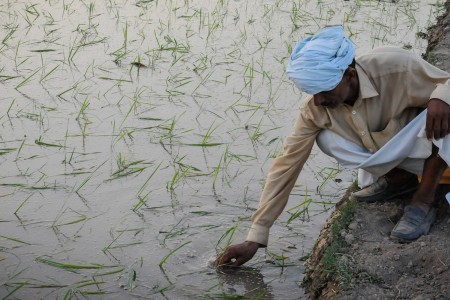
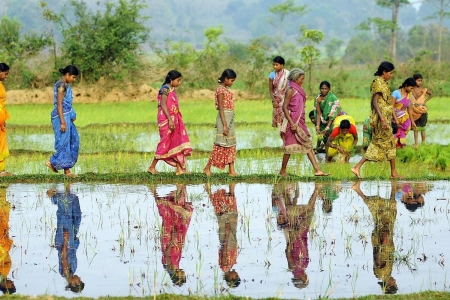
New policy changes have made pumping groundwater for irrigation cheaper in West Bengal where groundwater resources are ample, resulting in greater production and income for poor farmers.
Researchers are proving that establishing fruit tree orchards can preserve biodiversity, reverse land degradation and provide farming families with a reliable source of income.
Water Funds could play an important role in improving water management, ecosystem functions and livelihoods in river basins. Scientists have explored their potential in Peru and Kenya.
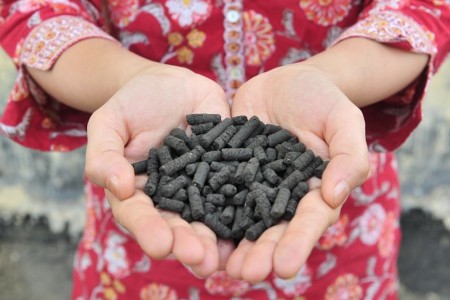
WLE’s Resource Recovery and Reuse (RRR) program is striving to reduce urbanization’s negative footprint on ecosystems by safely converting human waste into a resource that benefits farmers, improves sanitation, and generates new business opportunities.
Finding ways to assess and manage trade-offs and opportunities - balancing human development and environmental preservation - may be the most important contribution made by scientists from WLE and its partners to the SDG process.
India has a new climate-smart cash crop: Sunshine. The sun increasingly is powering irrigation pumps on farms, and to avoid over-pumping of groundwater researchers have helped enable farmers to sell back surplus solar power to the utility grid.
A new study found that people who live near large dams in sub-Saharan Africa are at least four times more likely than others to contract malaria. The study also warned that with many new dams slated to be built in the region, malaria cases could rise by tens of thousands annually.
These are the top 25 publications published by WLE in 2014. The list includes the top three to four publications from each research theme, based on lists submitted by the research themes themselves. You can find many more via our publications search.
Dr. Keith Shepherd, co-leader of the Decision Analysis and Information Systems Research Theme, has been invited to be a member of the new Thematic Network on Data for Sustainable Development, one of the 12 Thematic Groups of the Sustainable Development Solutions Network (SDSN).