If irrigation in Africa could be increased using groundwater, it would not only be a boost to continental food security, but millions of smallholder farmers could have more resilient livelihoods.
The project built capacity for biodiversity management, increased agricultural productivity, and fostered resilience to the effects of climate change through the implementation of various agroforestry options adapted to local conditions.
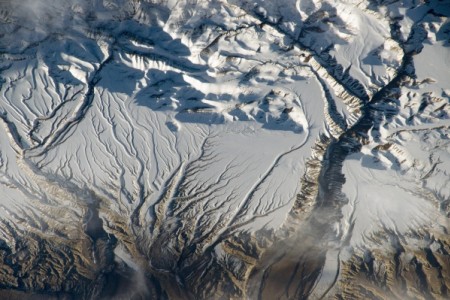
Over the course of a decade, half the spring water in the Indian state of Sikkim disappeared. No one is sure why this is happening. Climate change may be having an influence, along with other factors. But how can we find out more about the springs’ hydrology?
Hidden from the eye beneath the Earth's surface in soil pore spaces and in fractures of rock formations, groundwater supports global food security, contributes to public health, and is a critical factor in economic growth.
On 14 June 2016, a roundtable discussion on placing sustainability at the heart of agricultural development was held at UNESCO-IHE. The aim was to identify future solutions and collaborative opportunities that support a transition to sustainable intensification of agricultural systems for poverty alleviation and livelihood improvement.
WLE is a partner of the newly launched Groundwater Solutions Initiative for Policy and Practice (GRIPP), which seeks to advance the agenda of sustainable groundwater management at a global scale.
A group of researchers developed and ran a participatory gender training for farmer groups at one of their project sites in the Eastern Gangetic Plains, where there is a strong division of labor by gender and stringent gender norms. The goal was to sensitize farmers to how gender was influencing interventions and trainings.
Intensifying sustainable agricultural production through improved smallholder irrigation, flood-recession farming, and enhanced rainfed production systems and related ecosystem services is a key priority in the work being carried out by the CGIAR Research Program on Water, Land and Ecosystems (WLE) in the Volta River Basin.
Biodiversity is central to food security and should be evaluated by the Intergovernmental Panel on Biodiversity and Ecosystem Services (IPBES) urges Fabrice DeClerck in a recent Nature correspondence.