Marloes Mul of the International Water Management Institute (IWMI) published a blog on the IUCN Water Knowledge Platform on the work being done under the WISE-UP to climate project. Specifically, the piece looks at natural infrastructure as an important element of balanced water resource management planning in the Volta Basin.
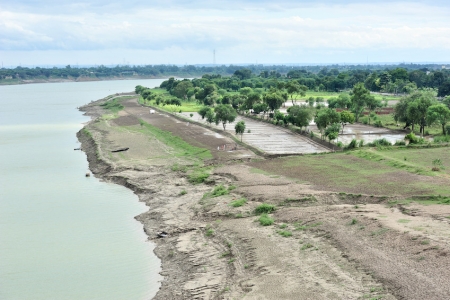
The recurrent threat of both flooding and drought looms large over many parts of the Mekong region. This variability is natural but is increasing due to climate change. Their destructive effects can be either relieved or compounded depending on the way dams are operated.
The International Center for Agricultural Research in the Dry Areas (ICARDA) held a gender mainstreaming workshop in cooperation with WLE and FAO in Cairo, Egypt.
There is great potential to expand groundwater use for irrigation in sub-Saharan Africa for environmental sustainability, agricultural productivity and greater social equality.
While satellites and aircrafts are increasingly being used to collect data on weather and climate, ground-based weather stations are important for providing long-term information on climate. One project is working to install FreeStations in the Volta Basin.
New research indicates that the number of people at risk of malaria around dams, and associated reservoirs, in sub-Saharan Africa will nearly double to around 25 million by 2080.
The number of Africans at risk of malaria who live near dams will nearly double to 25 million by 2080 as areas where the disease is not currently present will become transmission zones due to climate change, researchers said on Monday.
Groundwater already provides a critical lifeline for water-stressed communities, and competition for this valuable resource will only increase as almost half of the global population is expected to experience severe water scarcity by 2030. So how do we ensure its sustainable use?
During the past 18 months, seven project teams in the Nile-East Africa region have been working to develop recommendations and solutions for sustainable intensification of agriculture.
Meeting the Sustainable Development Goals on hunger and poverty will require a 50 percent increase in food production in the next 15 years. In fact, a global food revolution is urgently needed, argues a recent paper by a number of leading scientists working with WLE.
The 1,500 participants at the 7th Africa Agriculture Science Week (AASW) and Forum for Agriculture Research in Africa (FARA) General Assembly thought so, but they also concluded that science will have a key role to play.