Users of wetlands in the Nile River basin are increasingly confronted with tough trade-offs, as wetland areas become overexploited, deteriorate and ultimately fail to provide the benefits that communities and ecosystems depend on.
How farmers in Africa are finding ways to sustainably use wetlands
In recent decades, particularly in Africa, wetlands have become a new agricultural frontier. In response, a number of agencies are trying to explore sustainable wetland management as a way of reducing rural poverty, improving food security and strengthening livelihood resilience in the face of climate change.
Blue skies and drying reservoirs are to be a regular feature in the foreseeable future as Sri Lanka braces itself for one of the worst droughts in its recent history.
In the Gash Spate Irrigation Scheme of Sudan, farmers are able to cultivate watermelon as a second crop in the end of October – long after the rains have fallen and the floods have been diverted. So where does the water come from?
The Nile Water Lab is a new web platform that presents a wide range of views on irrigation projects along the Nile, both views from people on the ground and views that are usually hidden away in policy reports and journal articles.
Co-operating with your neighbours can bring benefits to all. But there are also risks. One person refusing to co-operate, or free-riding in a cooperative contract, can ruin it for everyone else, and sometimes one neighbour gets more out of the deal than another. Weighing up the costs and benefits of co-operation is hard, but now a study shows that carefully designed behavioural game experiments can help assess the usefulness of "sweeteners" aimed at encouraging people to co-operate. What’s more, games can help individuals learn how to get the most out of co-operating.
Much time, money and energy has been put into trialing greywater treatment technology in Jordan, but success rates are low. What can be learned from the work that has already been done to spread the use of the technology, both in Jordan and in Egypt?
The CGIAR Gender and Agricultural Research network held their annual meeting in early November 2016. Our gender coordinator, Nicoline de Haan, and gender post-doc, Stephanie Leder attended and presented a poster titled “Reframing Women’s Empowerment in water security and climate resilience programs in the context of male emigration in Western Nepal.” Here is a blogpost about the meeting from our partners at ICRISAT.
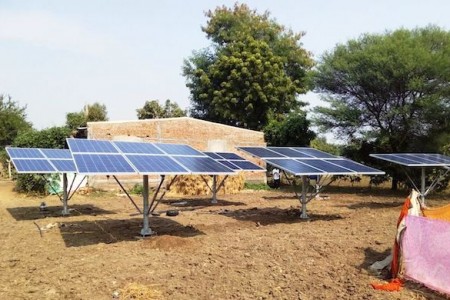
A farmers’ cooperative in Gujarat using solar-powered water pumps is showing the way to optimal irrigation and generating additional income by selling surplus electricity.