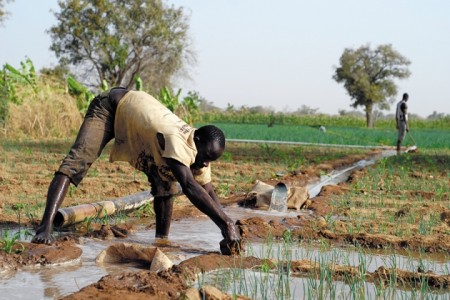
By Keith Shepherd and Rolf Sommer - How we manage soils is crucial to tackling climate change. Today, August 2, is Earth Overshoot Day for 2017, which aims to highlight the moment each year when our use of the planet’s resources tips into “overdraft”. The day helps to highlight why restoring landscapes, particularly soils, has benefits for food security, livelihoods and the climate.
In this most recent update from the IISD on the SDGs, the roll-out of Index-based Flood Insurance (IBFI) in Bihar, India is featured. IBFI was developed by IWMI through WLE and CCAFS to improve the resilience of farmers to climate disasters, like floods and droughts.
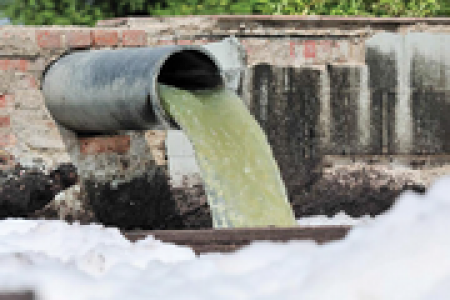
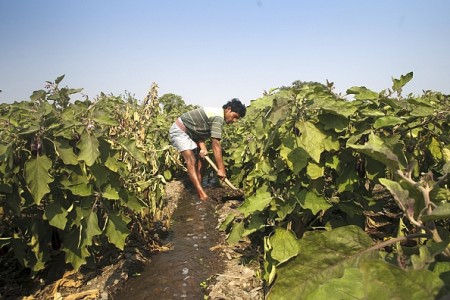
By Christopher A. Scott - Wastewater from sewage that is churned out by expanding cities and towns worldwide helps meet food security globally, especially in developing regions. It is one resource (unlike land, labour, or freshwater) that is continuously growing in volume and used to cultivate vegetables, grains, animal feed, and fish at a larger scale than we ever realized.
The Food and Agriculture Organization of the UN (FAO) and partners are conducting online consultations on how “water accounting” can be used to address water scarcity. WLE, IWMI and other partners helped develop the water accounting methodology known as WA+, based on global-scale datasets in the public domain.
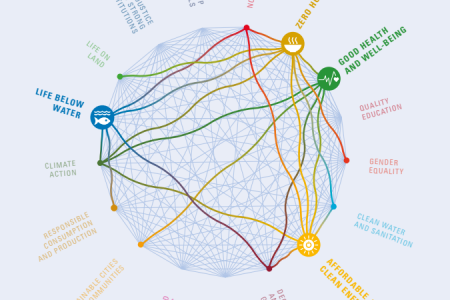
The International Council for Science (ICSU) organized a side event at the High-Level Political Forum (HLPF) to present its recently launched publication, titled ‘A Guide to SDG Interactions: From Science to Implementation.’ Claudia Ringler of WLE and the International Food Policy Research Institute (IFPRI) contributed to the publication and was present at the event. The ICSU publication is based on the work of a consortium of scientific research organizations that applied a seven-point scale to quantify synergies and conflicts among the SDGs and their targets.
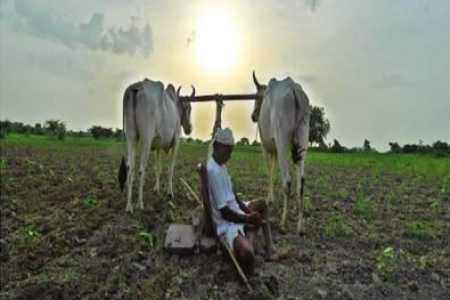
At a time when India is reeling under severe drought, water expert Giriraj Amarnath, recommends effective water management techniques, integrated farming and use of clean energy in farming to overcome hurdles posed by water scarcity. Also a research group leader in water risks and disasters at the International Water Management Institute in Sri Lanka, Amarnath in an interview with TOI says India can build better resilience systems for farmers through improved knowledge and advance warning
Gathering data that answer particular questions is the most effective way to support the Sustainable Development Goals, say Keith Shepherd and colleagues.
ROME (Thomson Reuters Foundation) - Untreated wastewater from cities is used to irrigate 50 percent more farmland worldwide than previously thought, leaving some 885 million people exposed to the risk of diseases, including diarrhea and cholera, a study said on Wednesday.ROME (Thomson Reuters Foundation) - Untreated wastewater from cities is used to irrigate 50 percent more farmland worldwide than previously thought, leaving some 885 million people exposed to the risk of diseases, including diarrhea and cholera, a study said on Wednesday.
The use of untreated wastewater from cities to irrigate crops downstream is 50% more widespread than previously thought, according to a new study published this week in the journal Environmental Research Letters.
The use of wastewater to irrigate crops is far more widespread than previously estimated, according to a new study, exposing hundreds of millions of people to health risks and posing a major environmental hazard.