The Africa Soil Information Service (AfSIS) aims to fill a major gap in soil spatial information in Africa. To this end new soil data were collected at over 9,000 locations from 60 sentinel sites in Africa and combined with collated and harmonized soil legacy data from over 18,000 locations in Africa.
RUAF and FAO have developed a City Region Food System (CRFS) indicator framework as part of their joint program on CRFS assessment and planning. This framework is designed to assess the current status and performance of a CRFS; identify priority areas for action and ways of measuring change; plan strategy and action to achieve desired outcomes; and establish baselines and monitor changes resulting from (future) policy and program implementation. WLE is supporting the further development of the framework applying a critical gender lens.
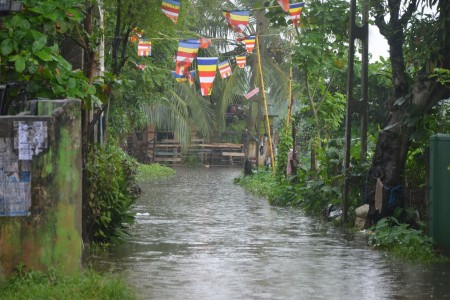
Pre-monsoon conditions in Sri Lanka have caused storms (with rainfall peaking at 350 mm over 24 hours) since 19 May 2018 in the southwest parts of the country. Precipitation triggered a flood and landslide situation across the country, affecting thousands of lives and livelihoods, as well as causing damage to property.
The Indus Basin is a system that supports a great number of people within and beyond its borders, but it is a system under considerable biophysical, social, economic and political stress. Planning for the future of this ever-changing, over-stretched system requires an open dialogue between scientists and policy makers.
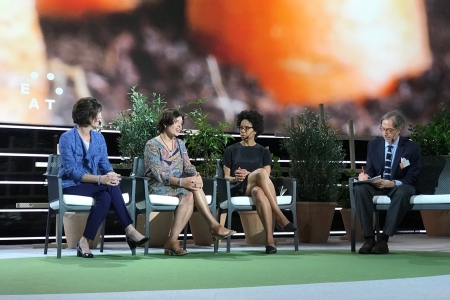
The two co-chairs of the Asia-Pacific assessment for the IPBES implore us to reduce and reverse biodiversity and ecosystem degradation for the future of the environment and ourselves.
Researchers from ICARDA and the Gondar Agricultural Research Center introduced the “Mirt” stove to households in Ethiopia to reduce the demand for firewood, improve soil fertility, and earn higher incomes for women. enhanced soil fertility – because of reforestation, reduced erosion and the availability of more manure; and higher incomes for women.
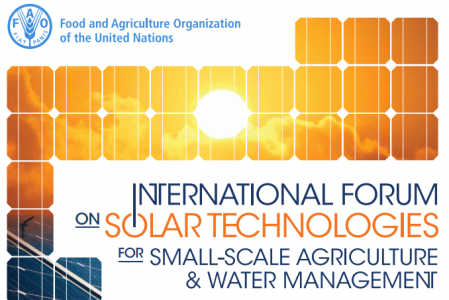
The International Forum on Solar Technologies for Small-scale Agriculture and Water Management was held at FAO Headquarters in Rome in April 2018, looking at the opportunities to benefit from solar technology by small-holder farmers, while also discussing some of the challenges and potential pitfalls associated with financing, implementing and regulating this rapidly growing sector.
A workshop on how to transform soil science to policy and practice was arranged by AgriFoSe2030 in Nairobi. Decision makers, practitioners, implementers as well as researchers in the fields of biophysical and social science took part in the workshop.
A decade of research shows that partnering with communities is vital if we are to meet growing food needs, while preserving the environment in two of the world’s largest river deltas. This is especially true in the face of climate change.
“Biodiversity – the essential variety of life forms on Earth – continues to decline in every region of the world, significantly reducing nature’s capacity to contribute to people’s well-being,” says the latest Intergovernmental Science-Policy Platform on Biodiversity and Ecosystem Services (IPBES) report.