A collection of opportunities for researchers working on sustainable agriculture issues: grants, workshops, journal calls, and related notices. Learn how to join the Thrive Network for Sustainable Agriculture Researchers.
WLE researchers based at ICRAF have authored a chapter in the recently launched GII 2018 report, highlighting the making of fuel briquettes from organic residue as an important innovation for Sub-Saharan Africa.
The Ghanaian Government is boosting measures to support resource recovery and reuse and announced the "zero landfill policy" this month at the JVL Fortifer Compost Plant.
Scientists from IFPRI and Bioversity have contributed to "The Economics of Ecosystems and Biodiversity (TEEB) for Agriculture & Food: Scientific and Economic Foundations," published by UN Environment.
IFPRI/WLE Researcher Wei Zhang's op-ed in Thompson-Reuters Foundation News explains how the failures of our food system won’t be solved overnight, but if we don’t strive to address the whole system, we are more likely to fail in tackling any individual piece of it.
By Claudia Sadoff for the Telegraph. Malaria research is currently focused on new methods of genetic mosquito manipulation but the way large dams are currently built and designed creates massive mosquito breeding grounds, adding to the disease burden. Changing dam design is a significant and neglected area of opportunity.
In 2015, UN Member States adopted the historic 2030 Agenda, setting universal and transformative goals and targets, and committing to working tirelessly for their full implementation. To ensure that no one is left behind, it will be vital to track progress towards the goals.
As the Global Landscapes Forum – the world’s largest science-led platform on sustainable land use – begins on December 19 in Bonn, Germany, ICRISAT research in Ethiopia shows how crop yields can be doubled in degraded soils while reducing fertilizer wastage through precision soil fertilization. Ethiopia, a land of farming contrasts, exports high quality coffee...
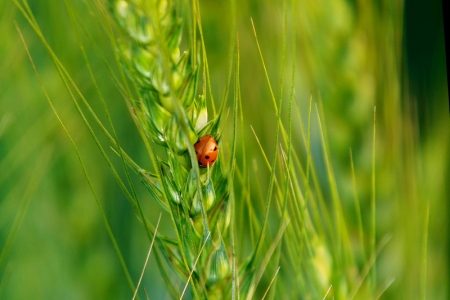
Natural predators of agricultural pests are cheaper and safer than insecticides
Farmers can save US$300 million by doubling ladybird density in cotton fields
However, biological pest control isn’t always a viable substitute
“By putting a value on this free service (provided by ladybirds) we invite people to think more carefully about what we get from nature and how we may be affected if we lose it — or if it continues to be poorly managed”
Wei Zhang, International Food Policy Research Institute