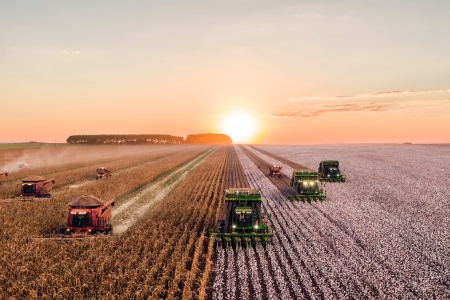
A new urgency is being felt on climate change. Schoolchildren are striking, there are protests in the streets, and politicians across the world, including the UK, are pushing to call climate change a national emergency. In some regions, heat and pests will not be the most significant climate threat – flooding will. The International Water Management Institute is therefore trialling several options to keep farmers’ yields and profits safe from the storms.
The Ethiopian Ministry of Finance (MoF) has signed a tax reform bill that is slated to remove almost all duty tax on irrigation, mechanization and animal feed equipment and technologies. This decision was brought about, in part, based on recommendations made by IWMI and WLE.
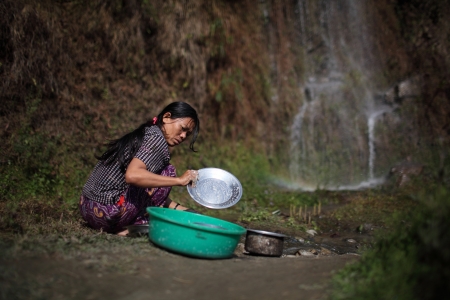
In the mountainous areas of Nepal, springs are the primary source of water for remote communities, serving as a mainstay of rural livelihoods. Springs are especially critical for dry-season agriculture because they can provide access to water stored in groundwater aquifers. The discharge from springs is declining, however, possibly as a result of population growth and changes in land use (including agricultural expansion and deforestation) and the climate. Recharging and sustaining groundwater aquifers is key for ensuring year-round water availability in connected springs and for reducing the reliance of upland communities on rainfall.
Can the world produce 10 billion healthy diets while transitioning agriculture from a source of degradation to one of restoration? Experts give insight at the EAT Food Forum on how best to take on this question, as WLE and EAT prepare the launch of the global Commission on Sustainable Intensification of Agriculture.
In mountainous areas of Nepal, springs are the primary source of water for remote communities, serving as a mainstay of rural livelihoods, but discharge from springs is declining. Recharging and sustaining groundwater aquifers is key for ensuring year-round water availability. IWMI researchers are using environmental isotopes analysis, hydro-meteorological and hydrogeological measurements to identify the dominant recharge zones for springs.
A collection of opportunities for researchers working on sustainable agriculture issues: grants, workshops, journal calls, and related notices. Learn how to join the Thrive Network for Sustainable Agriculture Researchers.
Countries would do well to consider this: our ability to preserve species hinges to a great extent on the actions we take to protect freshwater ecosystems. Safeguarding water for the environment is critical for biodiversity and for people.
The Global Assessment of Biodiversity and Ecosystem Services, produced under the Intergovernmental Science-Policy Platform on Biodiversity and Ecosystem Services (IPBES), warns that human activity could lead to the extinction of 1 million species. This Global Report brings together knowledge from the previous regional IPBES assessments, to which WLE researchers contributed.
The CGIAR Independent Science and Partnership Council (ISPC) recently launched 'Agriculture & Food Systems to 2050 - Global Trends, Challenges and Opportunities.' The foresight report explores the pressures on the global agri-food system between now and 2050.