in 2009, CPWF redefined its objective “to increase the resilience of social and ecological systems through better water management for food production.” Why did it matter at that time, and why does it still matter today for water, food and ecosystems?
In our globalised society, there are virtually no ecosystems that are not shaped by people, and no human being can survive without the services ecosystems provide. A resilience thinking approach investigates how interacting systems of people and nature can best be managed in the face of disturbances, surprises and uncertainty.
As WLE invites partners to embark on a month-long blog discussion of Resilience, I would like to share an experience that galvanized my conceptual thinking around resilience.
In the Mekong River Basin, hydropower has great potential to bring economic prosperity and electrification to many rural communities while meeting the growing power demands of urban centers. Which measures can we implement to prevent any one part of society from carrying the brunt of the costs, be they monetary, social, or environmental?
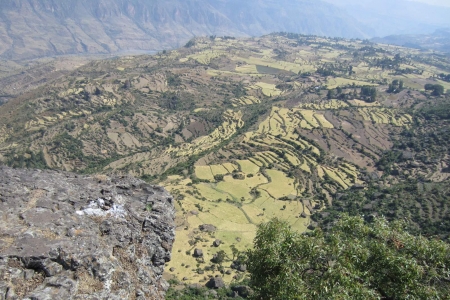
During his time in north western Ethiopia, Dr. Steven Prager observed the complex relationship between upstream and downstream farmers in the Fogera region of Ethiopia. His results, he said, were unexpected. Dr. Prager discusses the relationship between farm plot location and resilience in this podcast.
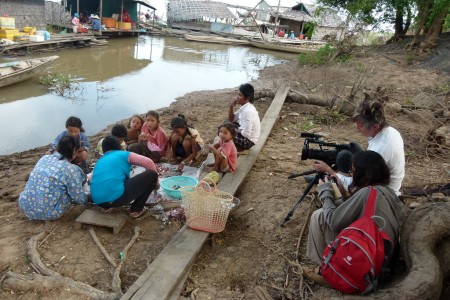
Douglas Varchol shares his experience filming the CGIAR Research Program on Water Land and Ecosystems' three films on the overall program, work in northern Peru, and in the Chinyanja Triangle in Southern Africa.
Scientists are asked to change, to ensure their research leads to concrete outcomes. As communicators, how can we change to support this push towards outcome-based research?
How to kill a nation’s rivers. I visited Poland, where they are doing just that. It is a terrifying lesson for the many other nations worried about floods and determined to engineer their way to a solution. Thailand, among others, please listen. There is a better way.
Wetlands and agriculture: for many this may seem a strange juxtaposition because wetlands and agriculture are often perceived to be conflicting. Today, a widespread perception is that agriculture simply destroys wetlands, undermining biodiversity and degrading all the beneficial ecosystem services that they provide.
More wetlands have been drained in the name of extending and improving agriculture than for any other reason. Yet real farmers often object, especially smallholders dependent on wetlands for parts of their livelihoods.
As scientists strategize about how best to introduce a holistic, “landscapes” approach to balance tradeoffs between conservation and development, policymakers and practitioners are considering how they can “invest” in landscapes, and whether they can be billed as investment opportunities.
If you drink a glass of water in Mexico City, you should know that its journey probably began in the watershed of the Amanalco Valle Bravo Basin. Sixty percent of the land that supports this water supply is owned by communities and cooperatives of family farmers. Sustainable land management is critical to protect this vital water supply.