Development decisions are often framed and made with limited engagement with local communities. A new book examines collective action and shows how it can provide us with a better definition of development that ensures its benefits and risks are shared more fairly.
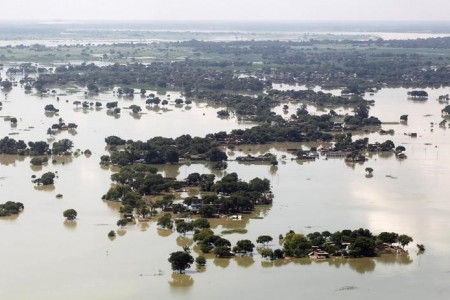
In a first-of-its-kind initiative in flood-prone Bihar, the International Water Management Institute (IWMI) is helping flood-affected farmers with Index-Based Flood Insurance (IBFI).
From the IFPRI Blog, Ruth Meinzen-Dick explores the potential of experimental games to help communities better manage their jointly used resources, like groundwater for better irrigation practices. Written on the occasion of World Water Week in Stockholm.
In order to be able to effectively respond to severe drought, governments need almost real-time data on moisture levels and vegetation. IWMI, through WLE and CCAFS, is providing this information to governments in South Asia.
As local disaster management authorities rush to respond to ongoing, severe floods in Northeast India, researchers at the International Water Management Institute (IWMI) are providing valuable support in the form of rapid-response maps, based on high-resolution satellite images.
In this most recent update from the IISD on the SDGs, the roll-out of Index-based Flood Insurance (IBFI) in Bihar, India is featured. IBFI was developed by IWMI through WLE and CCAFS to improve the resilience of farmers to climate disasters, like floods and droughts.
The Food and Agriculture Organization of the UN (FAO) and partners are conducting online consultations on how “water accounting” can be used to address water scarcity. WLE, IWMI and other partners helped develop the water accounting methodology known as WA+, based on global-scale datasets in the public domain.
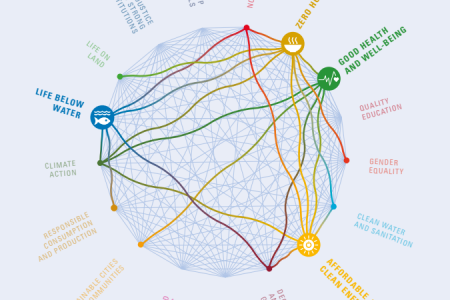
The International Council for Science (ICSU) organized a side event at the High-Level Political Forum (HLPF) to present its recently launched publication, titled ‘A Guide to SDG Interactions: From Science to Implementation.’ Claudia Ringler of WLE and the International Food Policy Research Institute (IFPRI) contributed to the publication and was present at the event. The ICSU publication is based on the work of a consortium of scientific research organizations that applied a seven-point scale to quantify synergies and conflicts among the SDGs and their targets.
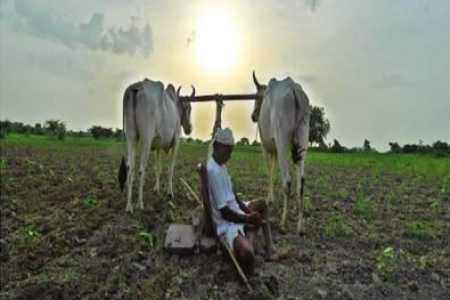
At a time when India is reeling under severe drought, water expert Giriraj Amarnath, recommends effective water management techniques, integrated farming and use of clean energy in farming to overcome hurdles posed by water scarcity. Also a research group leader in water risks and disasters at the International Water Management Institute in Sri Lanka, Amarnath in an interview with TOI says India can build better resilience systems for farmers through improved knowledge and advance warning
Climate change threatens to unleash more frequent floods. Satellite-verified flood insurance can underpin smallholder farmers’ livelihoods, as well as helping nations meet global development goals.