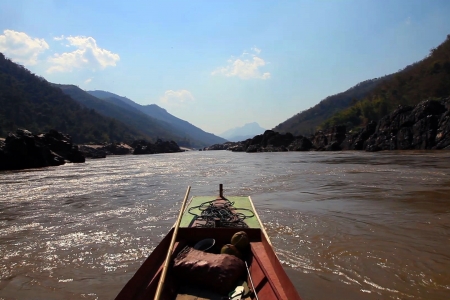
In the Mekong River Basin, hydropower has great potential to bring economic prosperity and electrification to many rural communities while meeting the growing power demands of urban centers. Which measures can we implement to prevent any one part of society from carrying the brunt of the costs, be they monetary, social, or environmental?
A persistent problem in the Mekong is that misplaced and resettled river communities from hydropower development are unable to continue their original way of living. How can new sustainable options be created for these communities?
There is something inherently fascinating about maps. They invite the eye to roam free and resonate perhaps with our ancient hunter-gatherer instincts. Maps tell stories of what was and what could be.
One cannot talk about water security in Asia without addressing the water energy food nexus. But if the links between water, food and energy are so strong, why are decision makers having such a difficult time addressing them together?
Today, the International Day for Biological Diversity, is the ideal day to spend the coffee break mulling over the relationship between water, biodiversity, and agriculture in some of the world’s most critical life raft ecosystems
For International Women’s Day, Andrew Noble, Interim Director of the CGIAR Research Program on Water, Land and Ecosystems reflects on the importance of the inclusion of women in natural resource management and agriculture.
I read "Scalar Disconnect" with a distinct sense of déjà vu. Between 2000 and 2003, I worked almost exclusively for the Mekong River Commission (MRC) Secretariat, then in Phnom Phenh.