The number of Africans at risk of malaria who live near dams will nearly double to 25 million by 2080 as areas where the disease is not currently present will become transmission zones due to climate change, researchers said on Monday.
During the past 18 months, seven project teams in the Nile-East Africa region have been working to develop recommendations and solutions for sustainable intensification of agriculture.
The 1,500 participants at the 7th Africa Agriculture Science Week (AASW) and Forum for Agriculture Research in Africa (FARA) General Assembly thought so, but they also concluded that science will have a key role to play.
A roundtable meeting was held in Addis Ababa, Ethiopia with water professionals from the Nile Basin to discuss the Water Accounting + framework and examine the thematic sheets produced for the Nile.
The data revolution offers enormous potential for improving decision-making at every level – from the local farmer to world-spanning development organizations. But gathering data is not enough.
Addressing the root causes of sediment problems and soil erosion around Lake Tana, source of the Blue Nile and largest lake in Ethiopia, is paramount for the conservation of natural resources and ecosystem services.
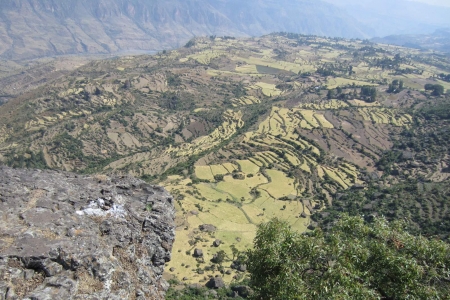
Community-led initiatives in the Yewol mountains in Ethiopia are successfully countering severe soil erosion, extreme weather and water scarcity to the benefit of farmers and the environment
Drones, or unmanned aerial vehicles (UAVs), are no longer a thing of the future. From their perspective high in the sky, these hovering insect-like machines grant researchers new and valuable insights on how crops evolve across landscapes and over time.
Water Funds could play an important role in improving water management, ecosystem functions and livelihoods in river basins. Scientists have explored their potential in Peru and Kenya.