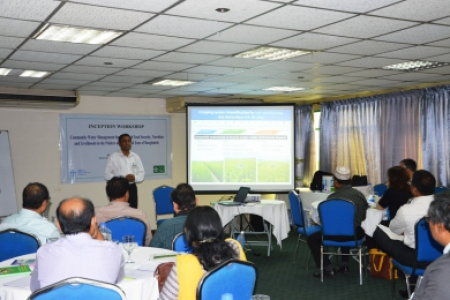
A project launching workshop of 'Community water management for improved food security, nutrition and livelihoods in the polders of the coastal zone of Bangladesh' was held in the city on Wednesday. The workshop was jointly organised by CGIAR research programs (CRP) on Water Land and Ecosystems (WLE), and Global Rice Science partnership (GRiSP).
Experts have put maximum emphasis on the Ecosystems-based approach to further intensify the food production to contribute more in the national economy side by side with meeting the nutritional demands of people in Bangladesh.
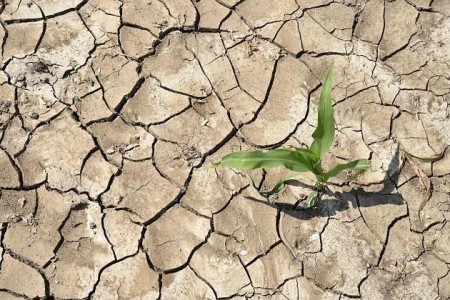
The salinisation of fertile soils could soon lead to a debacle around the world. Around 2000 hectares of arable land are lost every day, which is important for the cultivation of foodstuffs. Researchers suggest alarm: Where is our food tomorrow?
Around 2,000 hectares of agricultural land is lost each day due to the salinity in soil. Could breeding salt-tolerant crops be a new way to sustainable food?
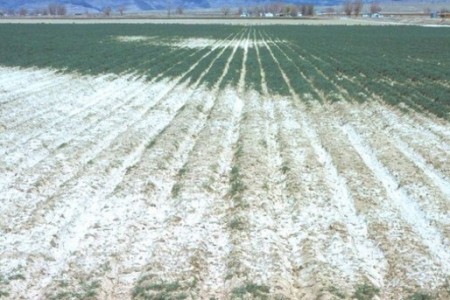
Salt-spoiled soils worldwide: 20% of all irrigated lands — an area equal to size of France; Extensive costs include $27 billion+ in lost crop value / year. UNU study identifies ways to reverse damage, says every hectare needed to feed world’s fast-growing population.
Imagine losing about 5,000 acres, or 15 average-sized farms in Iowa, every day. That's how much productive farmland has succumbed to salt damage in the last 20 or so years, according to a paper published Tuesday by a group of international researchers. And, they say, all that degraded land is costing farmers $27.3 billion a year.
It is the unnoticed poisoner of the world’s farmland. Every day, 2000 hectares of agricultural soil become unusable because of the damage caused by salt.
Salt-spoiled soils worldwide: 20 percent of all irrigated lands -- an area equal to France; Extensive costs include $27 billion+ in lost crop value per year
Salt-spoiled soils worldwide: 20 percent of all irrigated lands -- an area equal to France; Extensive costs include $27 billion+ in lost crop value per year
Every day for more than 20 years, an average of 2,000 hectares of irrigated land in arid and semi-arid areas across 75 countries have been degraded by salt, according to a study. Today an area the size of France is affected -- about 62 million hectares (20 percent) of the world's irrigated lands, up from 45 million hectares in the early 1990s.





_0/index.jpg?itok=nWxBJw-1&c=d89d80991b07df1ba781c198ec5aac14)
