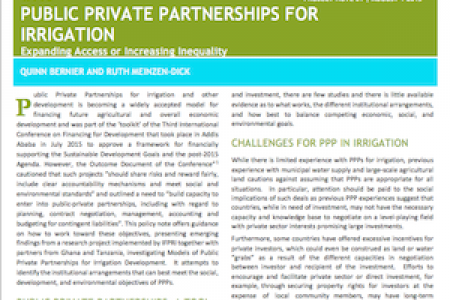
IFPRI has published a report on its work with Public Private Partnerships (PPP's) for irrigation in Africa, which is an outcome of their work assessing the potential benefits and drawbacks of using PPP's as a way to sustainably manage and develop irrigation schemes.
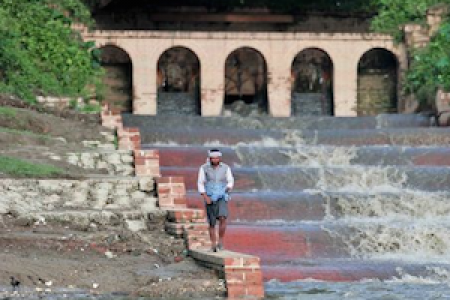
This two-year project will identify and analyze the feasibility of technical, economic, and institutional solutions to clean and restore riverine ecosystems and analyze the potential for implementation of the most promising solutions throughout the Ganga river basin.
After five years of activity, an impact assessment reveals a positive trend in livelihoods linked to increased conservation and use of Uzbekistan’s and its Central Asian neighbors’ fruit trees.
FAO published a new report that discusses the global significance of water for food security. Andrew Noble contributed a piece on sustainable agricultural intensification.
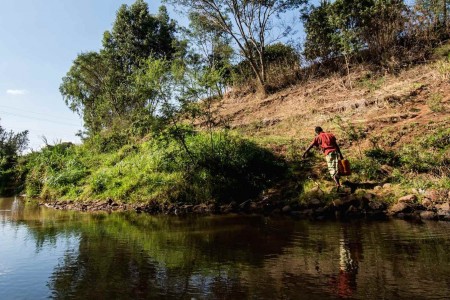
The Tana-Nairobi Water Fund is a public-private scheme that aims to unite big business, utilities, conservation groups, government, researchers and farmers.
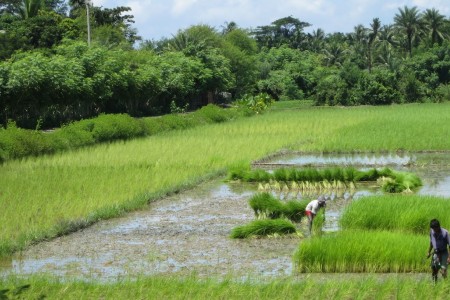
Using existing advances in crop and aquaculture technologies and available water resources, one WLE project is seeks to demonstrate that food security and coastal livelihood improvements are possible.
Seven WLE researchers have been selected to contribute to draft assessments of the state of biodiversity and ecosystem services at the global and regional levels.
The Kazakhstan portion of the Aral-Syrdarya watershed faces various challenges: Downstream water users are affected by the high concentration of pesticides, sediments and sewage carried in the river water from upstream areas.
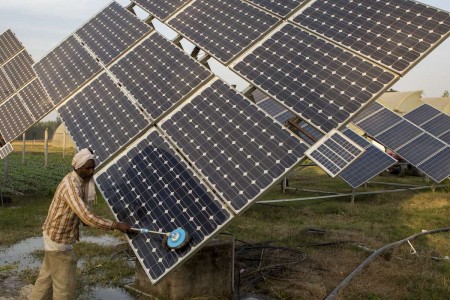
Ramanbhai Parmar, a smallholder farmer in India’s Gujarat state, has begun harvesting what could become the country’s most climate-smart cash crop yet – sunshine.