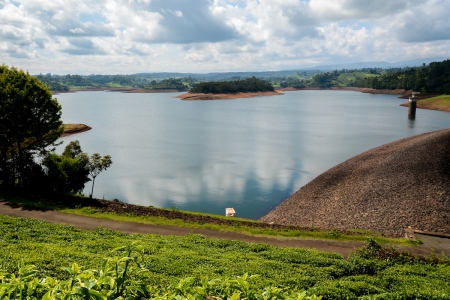
When the Challenge Program for Water and Food (CPWF) started research in the Limpopo Basin, Nile and Volta Basins nearly a decade ago, few people realized how valuable the investment would be. The combined contribution of dozens of institutions, hundreds of scientists and thousands of farmers has generated new approaches and improved technologies for capturing, storing and managing water resources to reduce poverty and increase food security.
The CPWF contributed to innovative ways of conducting research for development outcomes that lead to impact. It also helped develop new approaches and processes for ensuring that research is relevant to next users, end users and decision makers at all levels. Among the key findings, researchers found that on-going engagement and partnerships are critical for the transition between research outputs to outcomes and impact.
Researchers hold a unique position in trying to address the challenges facing rural populations and natural resources in Africa. The situation is critical and exacerbated by climate change. Researchers and their agencies need to be willing to engage early and often with next and end users in order to design relevant research and answer pressing research questions of value to the rural poor, as articulated by them.
For donors, strategic partners and development agencies, alignment with established programs, such as Comprehensive Africa Agriculture Development Program (CAADP), is vital. Such alignment ensures that good science and solid findings have audiences who can use them to solve relevant issues in local settings. This same group should take care to understand local development contexts and build upon existing initiatives, partnerships and networks. When each new program begins from ground zero, little real impact can be recognized within a project lifecycle.
Read the full report 'Research with development ambitions--Partnering with non-researchers'.
Other Partners
This reflection emerged from the CPWF Executive Writer’s Retreat, which was held June 23-27, 2014 at the Auberge du Cedre, Lauret, France and funded through WLE. After CPWF projects were completed and basin and program messages established, the meeting was organized to connect cross-basin reflection on concrete outputs and opportunities and to identify those elements on which WLE and other past and future partners could profitably build.
Related contents

Blog Post 
Blog Post 


Related publications
Innovation in farm reward mechanisms is pivotal for transforming agriculture to protect and restore nature in the Global South
Commission on Sustainable Agriculture Intensification. 2021. Innovation in farm reward mechanisms is pivotal for transforming agriculture to protect and restore nature in the Global South. CoSAI Policy Brief 7. Colombo, Sri Lanka: Commission on Sustainable Agriculture IntensificationMining the gaps: Using machine learning to map 1.2 million agri-food publications from the Global South
Commission on Sustainable Agriculture Intensification. 2021. Mining the gaps: Using machine learning to map 1.2 million agri-food publications from the Global South. CoSAI Policy Brief 3. Colombo, Sri Lanka: Commission on Sustainable Agriculture IntensificationBetter instruments and approaches are needed to transform agri-food systems research and innovation
Commission on Sustainable Agriculture Intensification. 2021. Better instruments and approaches are needed to transform agri-food systems research and innovation. CoSAI Policy Brief 4. Colombo, Sri Lanka: Commission on Sustainable Agriculture IntensificationReorienting funding for research and innovation is an urgent step to transform agri-food systems
Commission on Sustainable Agriculture Intensification. 2021. Reorienting funding for research and innovation is an urgent step to transform agri-food systems. CoSAI Policy Brief 1. Colombo, Sri Lanka: Commission on Sustainable Agriculture Intensification
Controlled Environment Agriculture for sustainable development: A call for investment and innovation
Commission on Sustainable Agriculture Intensification. 2021. Controlled Environment Agriculture for sustainable development: A call for investment and innovation. CoSAI Policy Brief 9. Colombo, Sri Lanka: Commission on Sustainable Agriculture Intensification