Water and Sustainable Development
Celebrated annually, March 22 is the UN Designated day to highlight the importance of water and its impact on the lives and livelihoods of millions globally. As with any other resource, the challenge of managing water for the future is at the forefront of sustainable development amidst a growing population, migration trends and a limited resource base.

Earlier this year, the World Economic Forum highlighted global water crises as the biggest threat facing the planet over the next decade. In the meantime, large-scale agriculture continues to be one of the primary drivers of unsustainable practices and the single largest contributor to biodiversity loss, carbon emissions and water scarcity.
Healthy ecosystems such as wetlands, forests and global landscapes underpin the global water cycle. Together with our spectrum of partners from the Food and Agriculture Organization of the United Nations (FAO), the CGIAR Consortium and beyond, WLE aims to foster a new integrated approach to natural resource management research, where a healthy functioning ecosystem is a prerequisite for agricultural development, resilient food systems and human well-being. The program aims to improve the sustainability of development in Africa, Asia and Latin America, regions that are seeing fast-paced economic growth but need to balance burgeoning demands for food and water, while ensuring environmental security.
WLE emphasizes the need to rethink agricultural development in the context of growing resource constraints and rising risks of abrupt changes affecting water, land and ecosystems.WLE focuses on strengthening the regulating services that ecosystems provide, such as by moderating extreme weather events, regulating water flows, treating waste, preventing erosion,maintaining soil fertility, controlling pollination, and regulating the climate. The program works in peri-urban areas, degraded sloping-lands, deltas and floodplains.
This World Water Day, we’ve highlighted our work together with our partners’ to reflect this year’s theme of Water and Sustainable Development; where from food and energy security to human and environmental health, water is vital in not only contributing to but also improving the lives and livelihoods of billions.


News from our partners:
Agriculture: increase water harvesting in Africa
 In the lead upto World Water Day, a recent post in Nature, co-authored by Johan Rockström, the executive director of the Stockholm Resilience Centre and Chair of WLE’s Steering Committee, calls for an integrated approach that connects water, food, growth and poverty in order to ensure that the framework for sustainable development in Africa proposed by the UN Sustainable Development Goals (SDGs) will be successful. Read the full article.
CIAT
Uniting farmers and business through Africa’s first Water Fund
 In the lead up to World Water Day, on March 20, in a first for Africa, The Nature Conservancy (TNC) and partners* including the International Center for Tropical Agriculture (CIAT), launched a landmark initiative in Kenya aimed at supporting farmers and upstream users, to curb the soil erosion that leads to reduced water and heavy cleaning costs.
The Tana-Nairobi Water Fund is a public-private scheme uniting big business, utilities, conservation groups, government, researchers and farmers. It aims to increase farm productivity upstream, while improving water supply and cutting costs of hydropower and clean water for users downstream, and is designed to generate US$21.5 million in long-term benefits to Kenyan citizens, including farmers and businesses. Read the whole news story.
IWMI
Looking back on 3 decades of research excellence
WLE’s lead Center, the International Water Management Institute (IWMI), is celebrating World Water Day by reflecting on 30 years of research excellence to support sustainable water use and development. During the last three decades, new ways of collecting, distributing and managing water have continually influenced their scientists’ work.
Special feature: The Effluent Society
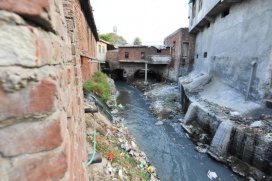 Can cities transform wastewater into an asset? Wastewater chokes rivers and can pose serious risks to human health but could also be key for urban planners seeking to make cities of the future more sustainable, according to scientists, including several researchers at the International Water Management Institute. In a jointly published book entitled Wastewater: economic asset in an urbanizing world, the authors argue that wastewater could be transformed from an environmental burden to an economic asset. But this will only work if the process can be made financially viable. Read the full post.
IFPRI
How can reliable water access contribute to nutrition security in Africa south of the Sahara?
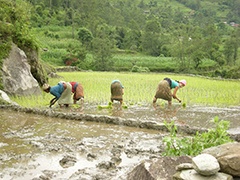 In this post for World Water Day 2015, Laia Domènech, visiting fellow in the Environment and Production Technology Division at the International Food Policy Research Institute (IFPRI), talks about how incorporating nutritional, health, and gender considerations into the design of new irrigation programs and policies would be an important step toward realizing the full potential of irrigation interventions for improved nutrition and human development. Read the full post on the IFPRI site.
Experimental Games for Strengthening Collective Action
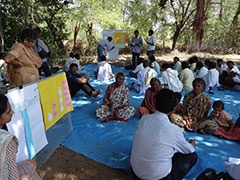 In India, a project led by the International Food Policy Research Institute (IFPRI) implemented experimental games that simulate water use in real life. Men and women played separately, and the hypothesis was that women would choose more water conserving crops because women bear the greatest burden when falling water tables deplete domestic water supplies.
Surprisingly, women chose more water consumptive crops. In 2014, the project followed up with qualitative research to investigate why women did not play more water conservatively than men. This revealed that there was a lack of understanding among many women about how choice of crop under irrigation affected domestic water supply. Having a better understanding could improve women’s abilities to make more informed and beneficial decisions. Read IFPRI's blog post.
Tools:
Sri Lanka expands online tool to help manage water resources
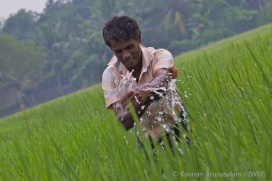 An online information system to aid government, researchers and development agencies in managing water resources and ecosystems in Sri Lanka has attracted more than 2,300 users since being launched a year ago.
The Sri Lanka Water Resources Information System provides maps and data on water availability, quality and use, and is an archive of more than 700 water-related scientific papers that can be downloaded. Read more about this initiative.
Snapshot: Tackling pollution in the Ganges
An IWMI photoblog is part of a new monthly Snapshot series.
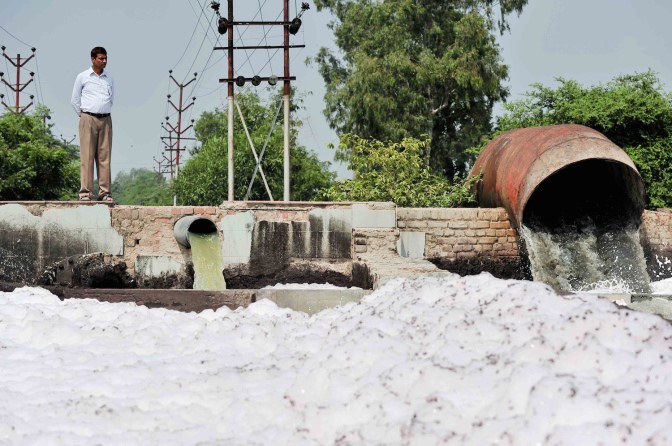
Photo by Neil Palmer/IWMI
Partially treated sewage and industrial effluent is pumped into irrigation channels in Jajmau, a suburb of the Indian city of Kanpur. What isn’t used by farmers eventually flows into the Ganges, one of the country’s most polluted rivers.
WLE has just started work with the Indian government to develop ways to tackle the pollution problem. One method could involve diverting wastewater onto specially created wetlands and letting the natural process of filtration and absorption remove pollutants. Another uses large areas of sand to filter the water before it reaches the river. Read more.
Infographics
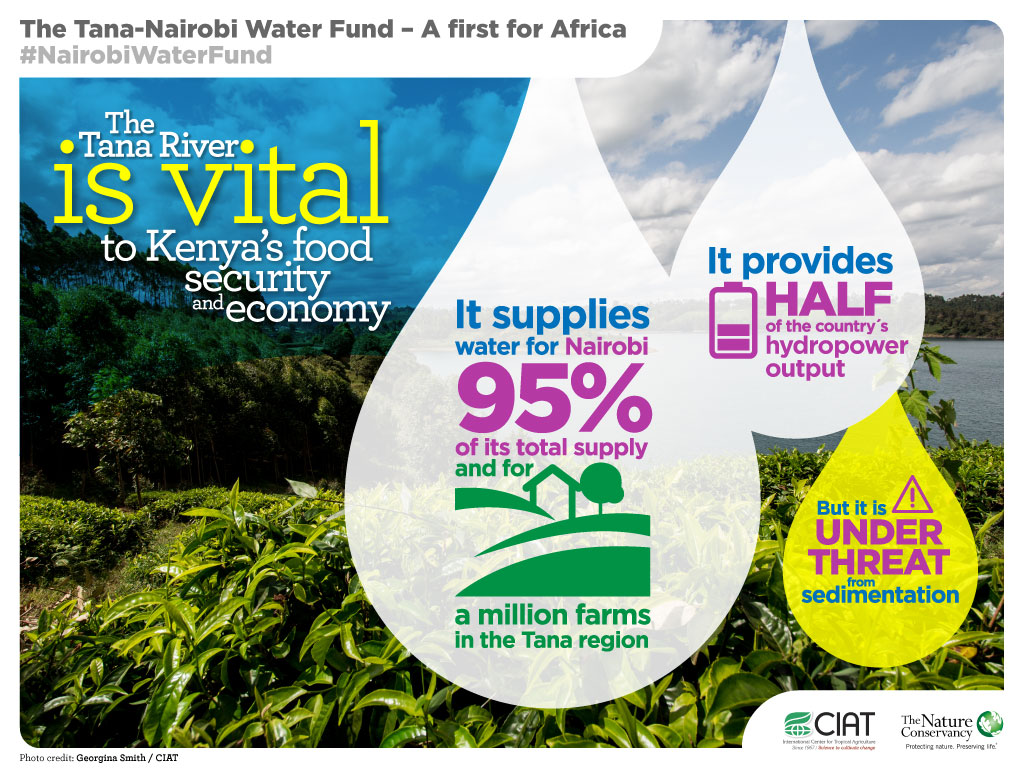
The Tana River supplies 95% of Nairobi’s water but can only meet 70% of total demand. View a series of infographics developed by CIAT to highlight how vital the Tana River is to Kenya’s food security and economy and how research plays a fundamental role in ensuring that interventions such as the Water Fund initiative can be successful. Download the series of 8 infographics via CIAT’s Flickr account.
From all of us here at WLE, we wish you a productive World Water Day. Follow the conversation on twitter #WaterIs