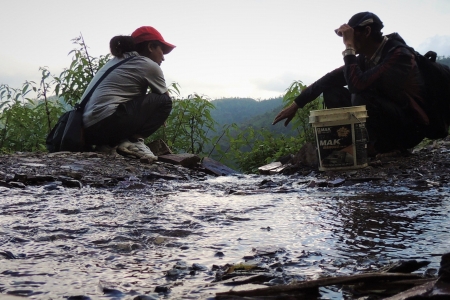
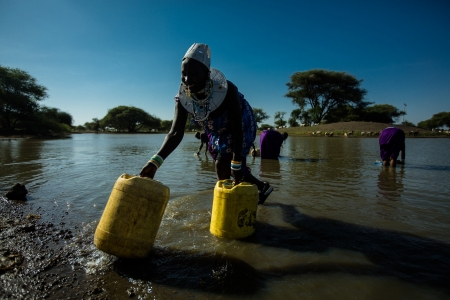
Bioversity International and partners work closely with local communities in Burkina Faso to tackle the dry season water constraints by supporting community-driven innovations that increase the equity and sustainability of reservoir management.
As dam construction surges across Southeast Asia’s Mekong region, major changes in river flows, sedimentation, and fisheries are taking place. WLE Greater Mekong has been compiling a free and publicly available Dam Observatory that collects data on planned and constructed hydropower and irrigation dams in four Southeast Asian river basins.
In an era of rampant land development and increasing climate unpredictability, the world is growing used to alarming images of flooded city streets. But cities can combat these floods by turning themselves into "sponge cities".
As the world marks World Wetlands Day this week, Colombo is gearing up to be recognized as one of the first official “Wetlands Cities” accredited by the Ramsar Convention. The vital benefits of urban wetlands – wet areas such as swamps, marsh and ponds – are on display in Colombo every day. They are, in fact, some of Colombo’s most precious infrastructure.
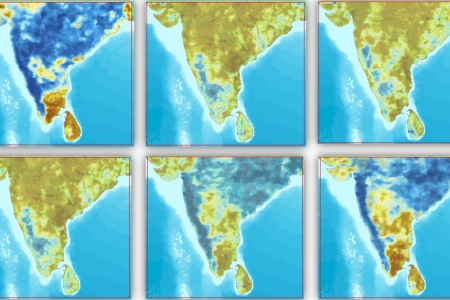
Using satellites to measure soil moisture isn't new, but a new mathematical algorithm is making this technology more accurate, and therefore better able to predict irregular conditions.
Despite wide spread land degradation that leads to decreased profits and uncertain livelihoods, a new study from IFPRI found that farmers in Sub-Saharan Africa are not adopting the mos profitable soil fertility management practices.
While some soils currently do not sequester carbon, it doesn’t mean they can’t in the future. All soils have the potential to sequester carbon if we can establish the right practices to do so within a given context.
As climatic extremes intensify unpredictably across the planet, the links between agriculture and gender are growing stronger. As are technologies used to assess the damage.