A new project funded by USAID to improve productivity in Bangladesh is building on the advances made in the WLE Project Community water management for improved food security, nutrition and livelihoods in the polders of the coastal zone of Bangladesh.
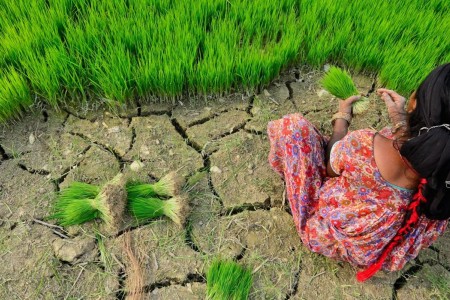
The coastal zone of Bangladesh is notorious for its low agricultural productivity and persistent poverty. Water salinity has been perceived as the biggest and most difficult challenge standing in the way for thriving agriculture – but what if that’s not the problem at all?
As a shifting climate and economic development make agricultural-based livelihoods increasingly less viable, men are migrating from rural areas in search of employment, while women are usually left behind.
Water Resources Minister Barrister Anisul Islam Mahmud on Tuesday stressed redesigning embankments to protect the country's coastal region from salinity intrusion caused by sea-level rise, reports UNB. "Climate change is going to reclaim one-third of our coastal land by 2050. So, we should redesign our embankments and dredge rivers."
With the help of technology, researchers are able to get information and data into the hands of those who need it, faster. As a result, decision makers and farmers are better-equipped to make informed decisions.
While land and water resources are rich in the coastal zone of Bangladesh, they are underutilized, and farmers are challenged by climate change and extreme weather events.
Researchers are working with governments, farmers and private sector actors to provide information for decision makers and test new infrastructure that can help ensure that communities are resilient.
New policy changes have made pumping groundwater for irrigation cheaper in West Bengal where groundwater resources are ample, resulting in greater production and income for poor farmers.
This two-year project will identify and analyze the feasibility of technical, economic, and institutional solutions to clean and restore riverine ecosystems and analyze the potential for implementation of the most promising solutions throughout the Ganga river basin.