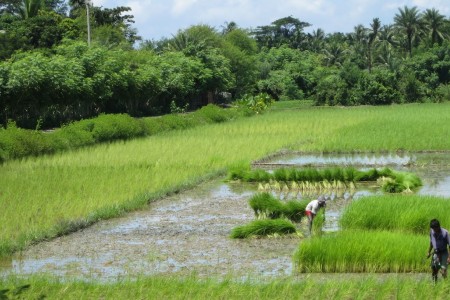
Using existing advances in crop and aquaculture technologies and available water resources, one WLE project is seeks to demonstrate that food security and coastal livelihood improvements are possible.
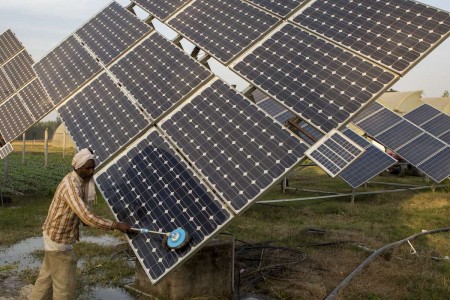
Ramanbhai Parmar, a smallholder farmer in India’s Gujarat state, has begun harvesting what could become the country’s most climate-smart cash crop yet – sunshine.
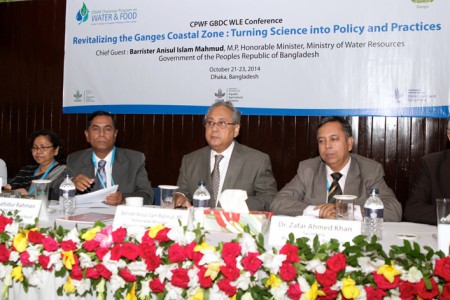
Two hundred researchers, extentionists, development practitioners and policy makers have gathered in Dhaka, Bangladesh to share research results, plans and ideas for unlocking the agriculture and aquaculture potential of the Ganges River basin’s coastal zone.
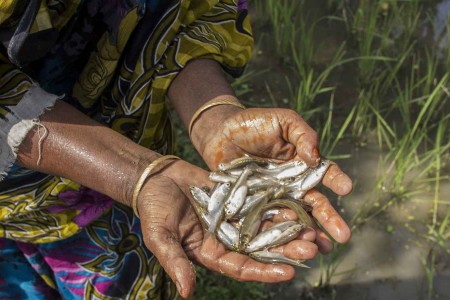
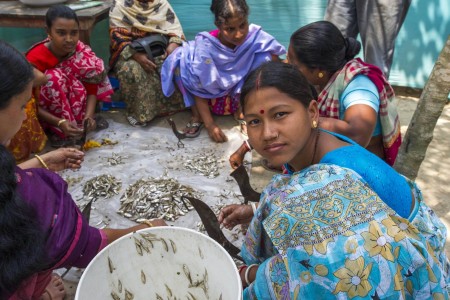
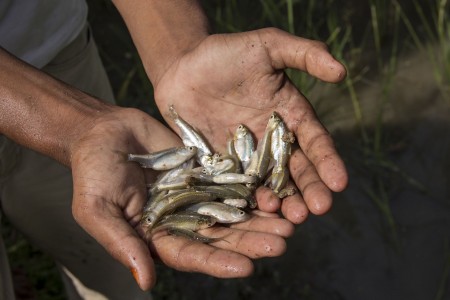
To better manage floodplain fisheries and alleviate the poverty of communities living around these rich ecosystems, scientists worked with fishing co-operatives for improved fisheries management.
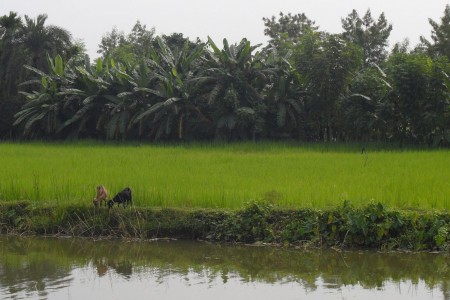
The floodplains of Bangladesh are a highly valued resource for the millions of farmers and fishers who rely on them for both sustenance and income. But what if the floodplains could be managed in a way that engendered more equitable communities and resilient ecosystems?
As the debate on the Sustainable Development Goals heats up with the G20 summit just around the corner, more than 200 researchers, extensionists, development practitioners, and policy makers convene in Dhaka on October 21-23, 2014 to share plans, progress and ideas for increasing resilience and unlocking the potential of the Ganges River basin’s coastal zone.