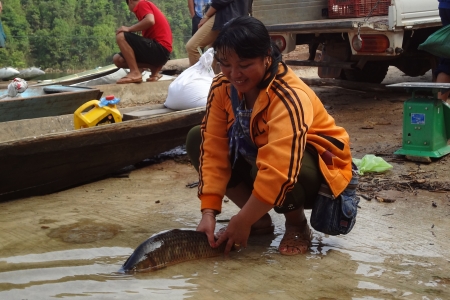
A new study shows how integrating fisheries into irrigation modernization can help meet the various needs of communities and nations, and help achieve the SDGs.
Even without climate change, there is an enormous challenge to meet the growing demand for food with the current status of soil health in sub-Saharan Africa (SSA). Closing this yield gap is possible - with the right technology and best practices - but represents a herculean task.
This year, Earth Overshoot Day falls on July 29, the earliest date yet, which tells us that we have prematurely exhausted Earth's resources beyond what can be regenerated. To move back the date, we are working with farmers to test new practices to halt environmental degradation and make food production more sustainable.
Originally published on the Daily Maverick: About half of municipal wastewater and water treatment works across South Africa are in a poor or critical condition. Many need urgent rehabilitation, and 11% are dysfunctional. Over three million people still do not have access to a basic water supply service. Self-supply in partnership with government could be the answer.
Originally published on the Chicago Council on Global Affairs, water, nutrition and agriculture experts share insight on technology adoption for women farmers.
This month marks World Environment Day and the Stockholm EAT Food Forum, as we search for solutions on how to better manage our food systems and natural resources. Some of the best solutions will involve science, government, and business working together through cutting edge business models.
Practical suggestions for preserving the environment—and with it, public health and well-being—by strengthening sustainable agricultural and food system practices. Originally published on IFPRI blog.
The lowlands of Afar, Ethiopia are characterized by alternating floods and droughts, making agricultural production difficult and putting local communities at risk. A deceptively simple solution is turning arid plains into green croplands.
Africa is rapidly developing, but this growth is uneven and has come at great cost to critical ecosystems and social stability. If African nations are going to reach their SDG targets by 2030 and their African Union Agenda by 2063, what has to change to ensure more ecologically sound, equitable development?
Our Earth is in crisis. It is now imperative that we find ways to live within our planetary boundaries. These five examples show how agriculture can help, not harm, our planet.
Ghanaian farmers cannot rely on the creation of new technology alone. Technology needs to be supported by smart implementation, good policies and great work. Ghana’s rise demonstrates four key lessons that could be helpful for other countries.
/index.jpg?itok=KK_btH_L&c=1e41ff7740f2c7be23dcc40569fe2d59)