


This post is part of the Agriculture and Ecosystems Blog’s month-long series on Resilience.
Sources of novelty and innovation are key to building resilience in socio-ecological systems. “Nature” is the ultimate innovator and we only have to examine adaptations that have evolved in response to complex problems to realise that it is a decisive and creative force. However, we often tend to overlook sources of innovation provided by natural ecosystems.
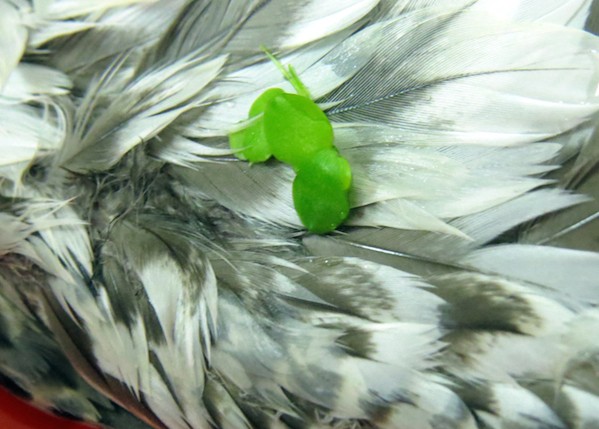 Yellow billed duck transports pond weed on its feathers. Photo: Chevonne Reynolds
A recent post highlighted the important role natural ecosystems may play in the resilience of agricultural systems. Specifically, the authors suggested that wild site refugia harbour an undiscovered diversity of crop varieties that may be well adapted to some of the large-scale disturbances currently challenging agro-ecosystems.
These wild refugia are proposed as important sources of novelty and innovation in agricultural systems, becoming increasingly important in the future. A return to the use of wild-type crops is already evident in an increasing number of farming operations. For example as a means of improving the resilience of farmers to droughts induced through climate change, drought resistant wild rice varieties are being planted in Africa and south-east Asia.
Wild areas enhance resilience by connecting habitats
Although these wild refugia may provide novel solutions to food security crises in the years to come, they also have a critical role to play in ecosystem resilience in a more current context. Wild refugia, or support areas, are critical to the spatial resilience of ecosystems. Wild areas should not be viewed as individual patches, but as a connected network of dynamic entities with exchanges, flows and feedbacks within a landscape. Should one patch experience some sort of disturbance it is able to reorganise, in part, through novel inputs from support areas in the network.
This connectivity can be brought about through both physical connections (e.g. corridors) and functional connections (i.e. mobile organisms). Maintaining a connected network of functioning wild patches is essential for the renewal and development of habitat post disturbance. This connectivity is a source of novelty and innovation allowing the opportunity for ecosystems to adapt and evolve to environmental change.
Wild support areas play a crucial role in the revival of marginal, fragmented, restored and ephemeral habitats. As an example consider the functional connectivity brought about by mobile species in the resilience of ephemeral wetland ecosystems. Wetlands in arid zones, such as southern Africa, are rarely physically connected and so must rely on the movements of mobile organisms for connectivity. Additionally, as part of the natural disturbance regime, these types of wetlands are prone to dry downs and droughts and thus frequently reorganise.
Organisms such as waterbirds play an essential role in the functional connectivity of these types of systems, especially as they are highly abundant, extremely mobile and undertake directed movements to other wetland sites. Waterbirds can facilitate a range of ecosystem functions including acting as: i) nutrient dispersers; ii) ecosystem engineers; and iii) vectors for other non-mobile fauna and flora.
Research has shown that waterbirds are especially good at dispersing the seeds of aquatic plants and the resting stages of aquatic invertebrates and thus influence the successional pathway followed post disturbance. In these systems waterbirds are key sources of innovation, which enhance the resilience of seemingly isolated ecosystems.
Wild areas can also support human activities
The same connectivity concepts that apply to ephemeral wetlands can be equally well applied to socio-ecological systems, where wild support areas facilitate ecological functioning within an anthropogenic landscape. For example, wild support areas facilitate animal pollination, which is required for approximately one third of all human food consumed on the planet. Insects, birds, bats and small mammals serve as pollinators while they move about routinely foraging, providing an invaluable ecosystem service upon which we all depend.
Honeybees, perhaps the most well-known and generalist pollinator species, are responsible for the pollination of approximately 50 crop species in southern Africa. Whilst much of this is undertaken by managed honeybee colonies in large-scale agricultural systems, these pollination services are often mediated by wild insect populations in small-holder farming operations. Once again nature finds an innovative solution to the transfer of genetic material essential for food production.
What can we do when agriculture and natural ecosystems come into conflict?
Our dependability on natural ecosystems is without question; however, viewing these ecosystems only as sources of innovation and salvation is somewhat naïve. These wild sites are often the cause of much conflict, a fact that threatens their biological integrity and persistence into the future. At Barberspan Nature Reserve in South Africa, farmers on neighbouring properties have called for the reeds of this Ramsar wetland to be removed. The vegetation around the pan is host to hundreds of thousands of Red-billed Quelea (Quelea quelea), a seed-eating bird species known to demolish entire crop fields within hours. Removing the reeds will not only affect other bird species which roost or hunt there, but will affect the entire hydrological regime of the pan.
Further examples include mass poisonings of small carnivore species by farmers wanting to protect their livestock and wild waterfowl being vectors of avian influenza, a deadly disease in the poultry industry.
How do we convince farmers to appreciate the value of living close to natural ecosystems, when their very livelihoods are at stake? How do farmers look to nature for innovation when nature is the very cause of their concern?
Human-wildlife conflict is not a new problem and has consistently pinned nature against man. Herein lies the challenge for scientists worldwide. There is a need to better understand these systems, not as separate from each other, but as linked socio-ecological systems. We need novel and innovative solutions to these conflicts if we want to protect our natural heritage into the future.
Related contents
Podcast 
Blog Post 
Blog Post 
Blog Post 


