Is the general notion of success in the emerging water sectors justified? Perhaps not completely. Decision support tools may contribute to a more strategic method selection and a more participatory process that may increase the chance of long-term success in water interventions.
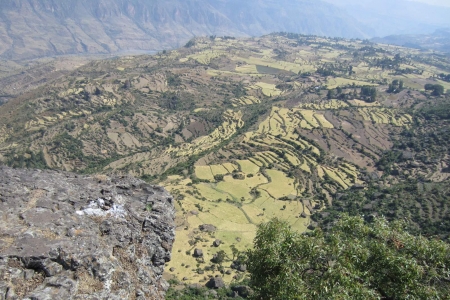
During his time in north western Ethiopia, Dr. Steven Prager observed the complex relationship between upstream and downstream farmers in the Fogera region of Ethiopia. His results, he said, were unexpected. Dr. Prager discusses the relationship between farm plot location and resilience in this podcast.
A persistent problem in the Mekong is that misplaced and resettled river communities from hydropower development are unable to continue their original way of living. How can new sustainable options be created for these communities?
Water is perceived to be a women’s business but the business of water lacks women, said Sonomi Tanaka of ADB at a recent conference on Women in Water Leadership.
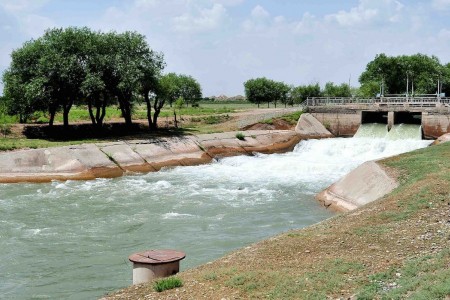
Unlike transportation, medicine, and even dam-building — all of which have experienced game-changing technological innovations during the past half century — canal irrigation has remained largely a technologically stagnant sector since the days of the Green Revolution
How to kill a nation’s rivers. I visited Poland, where they are doing just that. It is a terrifying lesson for the many other nations worried about floods and determined to engineer their way to a solution. Thailand, among others, please listen. There is a better way.
More wetlands have been drained in the name of extending and improving agriculture than for any other reason. Yet real farmers often object, especially smallholders dependent on wetlands for parts of their livelihoods.
This post reviews Agricultural Water Management Journal Special Section: Investing in small, private irrigation to increase production and enhance livelihoods. Articles are OPEN ACCESS u
From Pakistan to Egypt, under-performance of major irrigation networks has become endemic. But now a Dutch technologist thinks he may be able to help solve the problem using a simple smart phone application.
Lack of available water in the West Bank and Gaza Strip threatens the livelihoods of thousands of families dependent upon agriculture for their livelihoods. FAO finds rehabilitation of cisterns to be one cost effective method to improve access to water.
If you drink a glass of water in Mexico City, you should know that its journey probably began in the watershed of the Amanalco Valle Bravo Basin. Sixty percent of the land that supports this water supply is owned by communities and cooperatives of family farmers. Sustainable land management is critical to protect this vital water supply.
What makes a research model useful? In research for development, it must have a practical application and be grounded in reality. When used to assess trade-offs, model inputs must reflect people because they are the main drivers of change within systems.