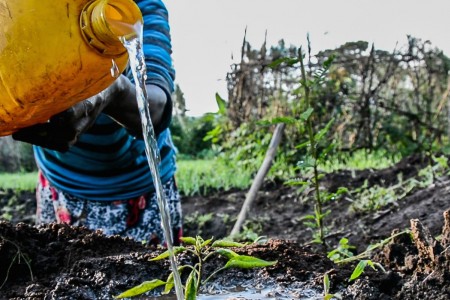
If business as usual continues, by 2030 almost half the world's population will experience water scarcity. But this is entirely avoidable with the adoption of appropriate technology and practices. How can the post-2015 development agenda utilize these solutions and achieve them at scale to avoid unnecessary gaps in water availability?
The First World Irrigation Forum in Mardin, Turkey, gives us a chance to take stock on how irrigated agriculture is performing and its role in meeting future demands for food. In agricultural water management, we often appear to be talking about the same issues as three decades ago...
At a recent meeting it was suggested that water markets could be the next big investment opportunity. I suggested the reality is much more complicated.
The influence of the intergovernmental Mekong Basin Commission to manage the river is hobbled by its absence of the biggest and most upstream country on the river – China. This time we are in Africa, with Zambia the only country that hasn't joined the commission.
Throughout the river basins of the world, water management issues have been caused or exacerbated by instances of destructive conflict. Collaboration will help mitigate water issues, but it must be grounded in science and involve multi-stakeholder engagement.
In Africa south of the Sahara, where agriculture is predominantly rainfed, farmers’ access to water is limited based on time and space. But water scarcity in the region is not necessarily caused by a physical lack of water.
Water Cooperation: Building Partnerships is this year's theme at Stockholm World Water Week. Strong partnership and collaboration are vital components of WLE. Stay tuned for posts from this year's conference.
There is something inherently fascinating about maps. They invite the eye to roam free and resonate perhaps with our ancient hunter-gatherer instincts. Maps tell stories of what was and what could be.
Threading its way from the semi-arid scrub of the Sahel, through the lush tropical farmlands of Southern Ghana, the Volta River supports the livelihoods of millions of West Africans.
Is a small footprint really better than a large one? In light of World Day to Combat Desertification, Dennis Wichelns discusses the usefulness (or lack thereof) of using water footprints to mitigate water scarcity issues.
CIP has undertaken a series of studies analyzing and testing irrigation techniques in order to develop a system for producing sufficient potato crop yields in arid climates with poor water supplies.