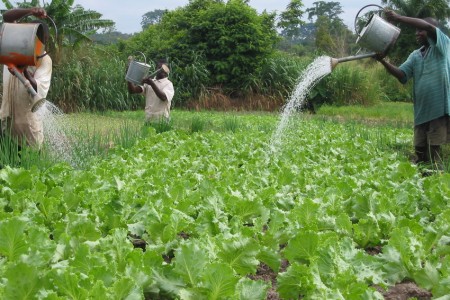
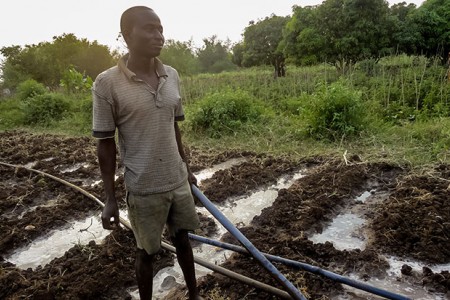
Irrigated agriculture can contribute to lasting deterioration of groundwater quality, preventing its use for drinking and endangering ecosystems and bio-diversity. If we're going to get global agriculture right, we'll need to promote good groundwater governance.
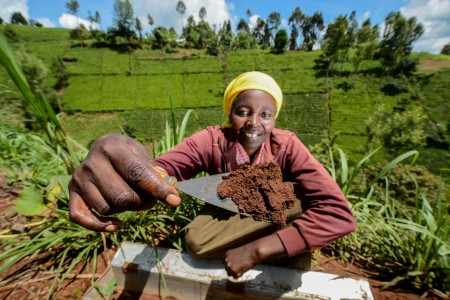
December 5th is World Soil Day. Rising temperatures are triggering carbon loss in areas with high carbon stocks. CIAT is looking at how to reverse this and how soils can even help sequester more carbon from the atmosphere.
Agriculture can be a means to landscape restoration, but this capability is often overlooked. A recent session at COP22 in Morocco begins to explore the ways that agricultural landscape restoration can play an integral role in mitigating climate change.
As human activity pushes our planet past its natural boundaries, the window for reversing environmental damage is rapidly closing. However, by modifying some human activities, especially agriculture, it might be possible to undo some of the damage that we have already done.
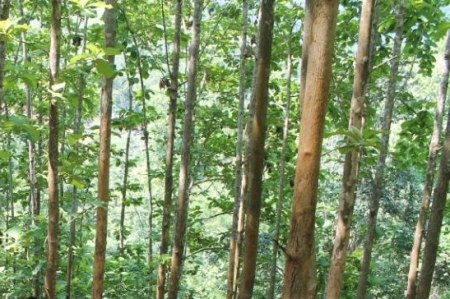
A recent research publication covering two similar catchments in upland Laos and upland Vietnam found a striking different hydrological situation in each place. What accounts for the difference, and what are the implications for forest management policy?
The impacts of climate change are felt in every region around the world. In the Mekong Region, these impacts have a particularly profound impact on food security: a new MOOC from SEI will investigate this topic.
Ecomodernism embraces agricultural intensification as one of the primary means of decoupling humanity from the environment. However, ecomodernism relies on some problematic assumptions about the division between humanity and nature and the nature of human use of rural spaces.
What do we all know about climate change, beyond the fact that the world is warming, the wet areas are getting wetter and dry areas drier? With scientists telling us that the trend is bound to worsen - what are we to make of a new study saying that this is all wrong?
The global economy is under pressure from the planet. The effects are felt by all businesses, but most by those whose supply chains depend on water, land and ecosystems.