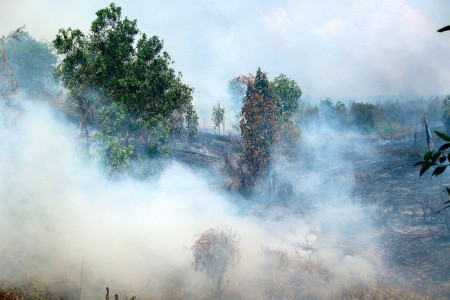
What is the future for Indonesia and its landscapes? The country is at an extraordinary moment. Under the new populist government of Joko Widodo, huge areas of the country’s state lands may change hands in the next few years.
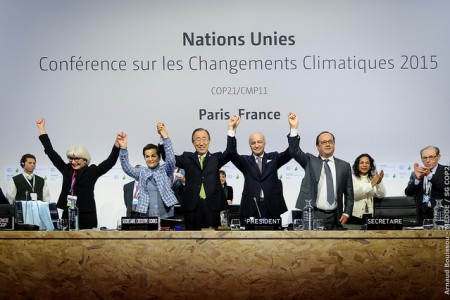
Climate change activists were all smiles at the conclusion of the Paris Agreement last weekend. But what about those wanting an agreement that would restore and sustainably manage landscapes? What did the deal say about forests and forest dwellers? Did it give a boost to “climate-smart agriculture”? Or do we just face a blitz of low-carbon hydroelectric dams?
Green infrastructure involves making conventional urban infrastructure more sustainable, cost effective, and resilient to climate change. But implementing such techniques, in less well-planned cities in Southeast Asia may prove to be more difficult than in western cities.
United Nations climate negotiations will be critical for the future of the planet, right? There is no time to lose. We need less politics, and more action. Well, not so fast, maybe
Many farmers long ago turned to groundwater pumping to cope with water supply shortages. But how much energy do we use to access this water source? The answer has remained something of a mystery — until now.
Hovering over almost all of the discussions at Stockholm World Water Week was the question of climate change, and one of the few aspects of climate change we can be absolutely certain about is that things are going to become more variable. Claudia Ringler and Jeremy Bird join us on this episode of Thrive Podcast.
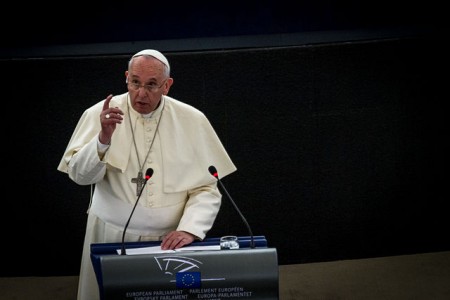
Pope Francis' 'Laudato Si' encyclical has gained a considerable amount of attention over the past few weeks. Not a single international conference on climate change or development has gone without referencing the Pope’s landmark piece
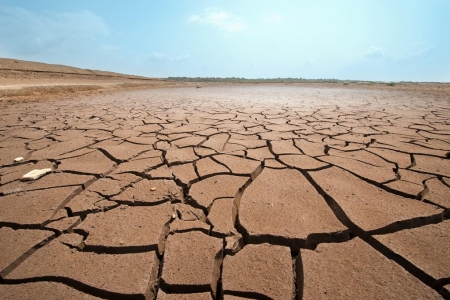
How will the world’s poor farmers be helped to adapt to oncoming climate change? What will prevent the rural inhabitants of sub-Saharan Africa from starving as their crops shrivel in the predicted mega-droughts? The answer, apparently, is insurance.
Climate science has a large interest in ‘average weather’. There is an obsession with predicting larger climate trends: regional long-term patterns of rainfall, temperature peaks and averages. How this pans out locally in time and space in less understood.
In the face of climate change managing water resources is becoming more difficult. In an effort to manage increased water variability, there is a competing discourse on the need for more built infrastructure (e.g. dams, canals and levees) to store and regulate water in order to support social and economic development and facilitate adaptation to climate change.
It looks like the triple bottom line might be gaining headway in the development sector. Despite the long-standing schism between Wall Street investors and environmental or social activists, the two sides are starting to find common ground at the increasingly popular landscape intersection.
Unprecedented challenges at a planetary scale may sound daunting. Luckily there are people around the globe working to face these challenges, and on November 17th their tools and ideas will be available and open to anyone with an internet connection as a free MOOC – massive open online course.