As climatic extremes intensify unpredictably across the planet, the links between agriculture and gender are growing stronger. As are technologies used to assess the damage.
What tools and knowledge can be shared with young farmers in drylands to manage and reduce risks from a changing climate while protecting and improving their livelihoods in these rural areas?
Cassava, or Tapioca as it is more popularly known, is a very important staple crop in Vietnam, as well as most of Southeast Asia. This robust crop is facing some serious threats, in the form of pests, depleted soils, and unsustainable farming practices.
With growing populations and the worst food crisis since World War II, implementing the SDGs in a way that takes advantage of overlaps while accounting for conflicting interests is more important now than ever before.
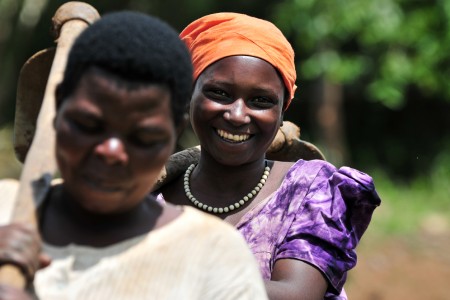
Ahead of the 11th International Conference on Community-Based Adaptation (CBA11), Daphne Nansambu looks at an aging agricultural population in Uganda and considers why so many youth are migrating away from farming, as well as what can be done to keep them in the sector.
The Asia-Pacific Regional Assessment for the Intergovernmental Science-Policy Platform for Biodiversity and Ecosystem Services (IPBES) has been drafted and is ready for external review. Get involved!
This week marks the launch of the new CGIAR research portfolio. Izabella Koziell, Program Director, lays out the ambitions of the CGIAR Research Program on Water, Land and Ecosystems (WLE).
How can investors in climate resilience know whether their support is having the intended effect? In an attempt to provide answers, WLE scientists have reviewed a suite of existing tools designed to assess livelihood resilience in the face of climate change.
New studies released by CIAT and partners show that, given the vast amount of carbon stored our soils, small management changes could have tremendous impacts, offsetting greenhouse gas emissions.
Shared risks of natural and infrastructural disaster across the water, food and energy sectors are seldom recognized until after it's too late. Is there a way to develop solutions before disaster strikes?