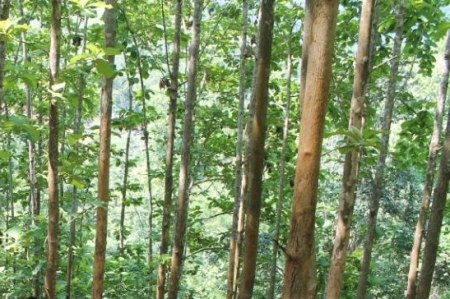
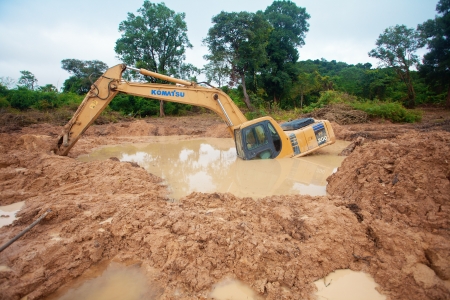
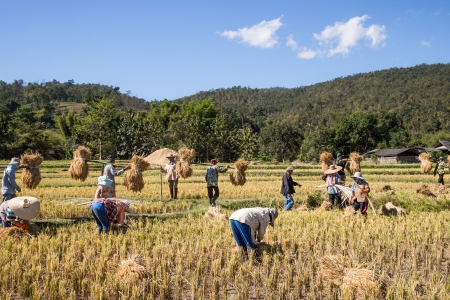
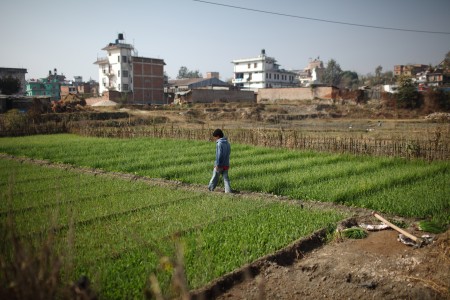
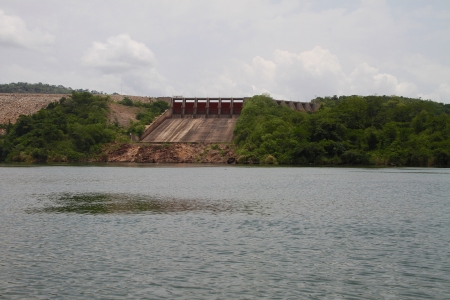
A recent research publication covering two similar catchments in upland Laos and upland Vietnam found a striking different hydrological situation in each place. What accounts for the difference, and what are the implications for forest management policy?
The African continent has the potential be one of the world's food-producing powerhouses, but agriculture has lagged behind other sectors across the region. Strong cross-sector partnerships will necessary to ensure the development of Africa's food production abilities.
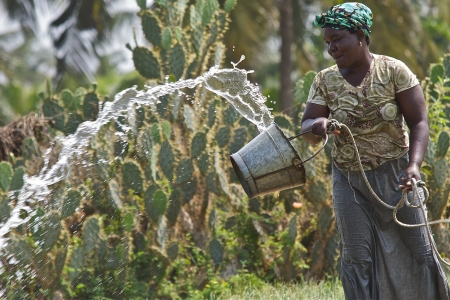
The African continent is experiencing a tremendous boom in irrigation funding. For this boom to be as beneficial as possible, access to irrigation must be equitable across gender lines.
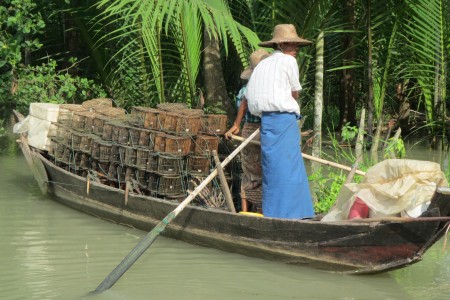
Mekong region governments promote foreign direct investment (FDI) as a path to various development solutions. However, despite FDI's success stories, the benefits of FDI are unevenly distributed and tangled up with a variety of tradeoffs.
The impacts of climate change are felt in every region around the world. In the Mekong Region, these impacts have a particularly profound impact on food security: a new MOOC from SEI will investigate this topic.
Debates on the best way to sustainably intensify agriculture have thus far focused on the constraints to adopting new farming technologies. Refocusing research on the actions of farmers could provide a clearer picture of the complex, context-dependent preconditions for sustainable intensification in specific places.
Ecomodernism embraces agricultural intensification as one of the primary means of decoupling humanity from the environment. However, ecomodernism relies on some problematic assumptions about the division between humanity and nature and the nature of human use of rural spaces.
Development banks take a reductionist approach to hydropower; the critical counter-discourse calls for more nuance. These two discourses rarely cross paths, but a new paper in Global Environmental Change directly addresses both views from a critical scientific perspective.
In order to understand how women participate in water governance, it is crucial to identify and then challenge our assumptions about women's involvement with both formal and informal community-based resource governance systems. This "Science on the pulse" draws on recent literature to clarify the challenges and consider new directions in women's participation in water governance.
Acquatic biomonitoring is a powerful tool for assessing the health of river systems. On a recent trip to Myanmar, IWMI researchers explored the viability of biomonitoring for evaluating the health of the Ayeyarwady and Thanlwin rivers.
At a recent roundtable discussion, members of WLE and UNESCO-IHE discussed the future of agriculture. Participants identified the complexity of incentivizing a sustainable food system and highlighted the importance of collaborating across sectors to change entrenched ways of thinking about sustainable agriculture.
The data is abundantly clear: it's time to transition to cleaner, more sustainable agricultural practices. A new report from IPES-Food demonstrates how vicious cycles of vested interests and entrenched thinking are the barriers to agricultural change.