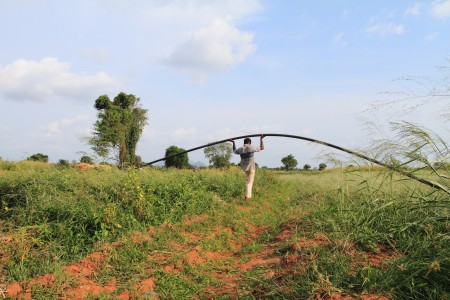
The Ethiopian Ministry of Finance (MoF) has signed a tax reform bill that is slated to remove almost all duty tax on irrigation, mechanization and animal feed equipment and technologies. This decision was brought about, in part, based on recommendations made by IWMI and WLE.
Can the world produce 10 billion healthy diets while transitioning agriculture from a source of degradation to one of restoration? Experts give insight at the EAT Food Forum on how best to take on this question, as WLE and EAT prepare the launch of the global Commission on Sustainable Intensification of Agriculture.
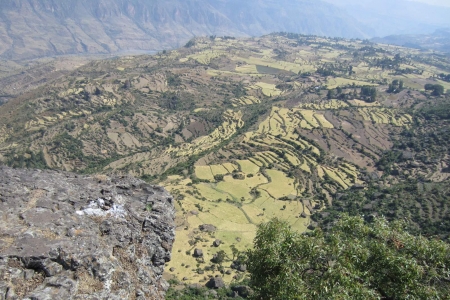
Scientists and government officials are collaborating with communities to test out new approaches to reversing land degradation—methods that might have potential to change the status of the entire highlands region from vastly degraded to successfully restored.
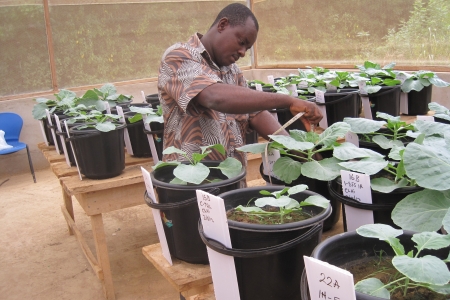
IWMI received a commendation from the Government of Ghana for its contribution to incorporating organic fertilizers into the government's Fertilizer Subsidy Programme.
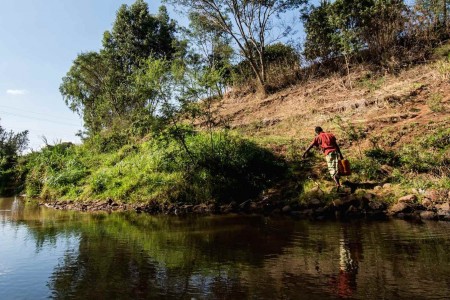
Community-led initiatives in the Yewol mountains in Ethiopia are successfully countering severe soil erosion, extreme weather and water scarcity to the benefit of farmers and the environment
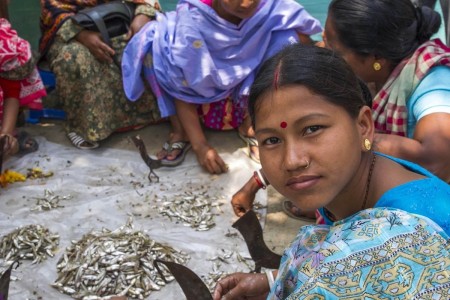
While land and water resources are rich in the coastal zone of Bangladesh, they are underutilized, and farmers are challenged by climate change and extreme weather events.
Researchers are working with governments, farmers and private sector actors to provide information for decision makers and test new infrastructure that can help ensure that communities are resilient.
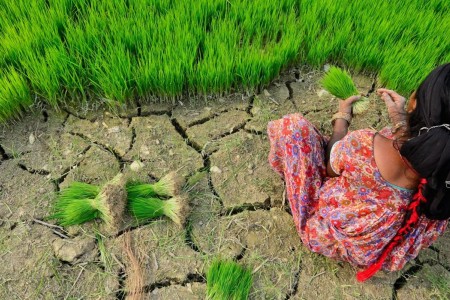
New policy changes have made pumping groundwater for irrigation cheaper in West Bengal where groundwater resources are ample, resulting in greater production and income for poor farmers.
Researchers are proving that establishing fruit tree orchards can preserve biodiversity, reverse land degradation and provide farming families with a reliable source of income.
Water Funds could play an important role in improving water management, ecosystem functions and livelihoods in river basins. Scientists have explored their potential in Peru and Kenya.
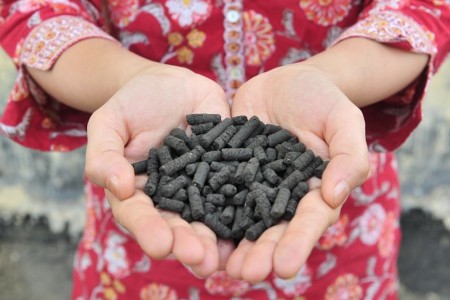
WLE’s Resource Recovery and Reuse (RRR) program is striving to reduce urbanization’s negative footprint on ecosystems by safely converting human waste into a resource that benefits farmers, improves sanitation, and generates new business opportunities.