Finding ways to assess and manage trade-offs and opportunities - balancing human development and environmental preservation - may be the most important contribution made by scientists from WLE and its partners to the SDG process.
India has a new climate-smart cash crop: Sunshine. The sun increasingly is powering irrigation pumps on farms, and to avoid over-pumping of groundwater researchers have helped enable farmers to sell back surplus solar power to the utility grid.
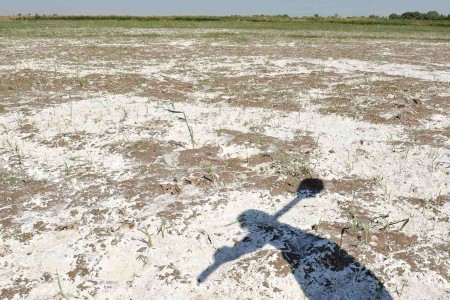
Around 5,000 acres of farmland in arid and semi-arid regions are lost every day to damage caused by salt, according to a UN report with contributions from scientists at the International Water Management Institute and WLE.
The county capital of Wajir in northeast Kenya lacks clean drinking water and has no suitable source of water nearby. That's why the Kenyan government plans to tap into an important groundwater body, the Merti aquifer.
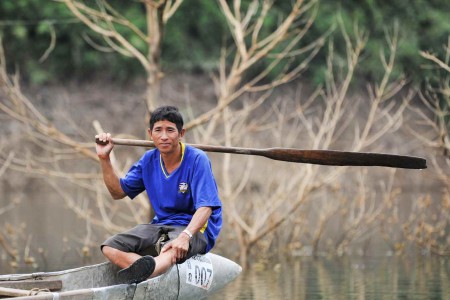
In the development of hydropower schemes, local populations are sometimes displaced or relocated in order to make room for dam infrastructure and reservoirs.
Sophisticated mapping tools and land restoration cost analyses in efforts to improve ecosystem health in Kenya, which faces complex problems such as uncontrolled open-pit mining.
Scientists has launched a web-based program to improve water management investment decisions in areas of sub-Saharan Africa where crop failure is high.
Humans generate millions of tons of solid and liquid waste every day. The waste is rich in energy, water, nutrients and organic compounds vital for plant growth.