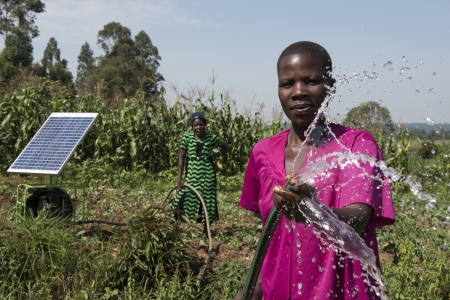
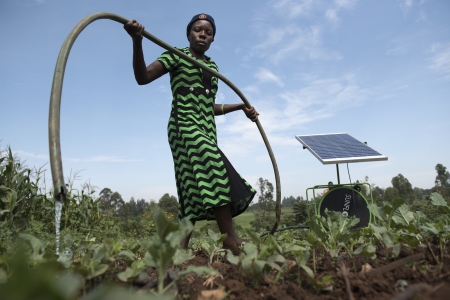
Private and public sector players met at FAO in Rome to discuss the many facets of solar technology use for irrigation and other uses on small and medium scale farms, including financing, application, and innovations.
Bioversity International and partners work closely with local communities in Burkina Faso to tackle the dry season water constraints by supporting community-driven innovations that increase the equity and sustainability of reservoir management.
As dam construction surges across Southeast Asia’s Mekong region, major changes in river flows, sedimentation, and fisheries are taking place. WLE Greater Mekong has been compiling a free and publicly available Dam Observatory that collects data on planned and constructed hydropower and irrigation dams in four Southeast Asian river basins.
The world is currently facing a daunting double challenge: human populations and material demands are increasing while natural resources are declining at an alarming rate.
GILIT offers an integrated, participatory approach for measuring gender equity in irrigation schemes, facilitate learning, and help identify ways to improve equity.
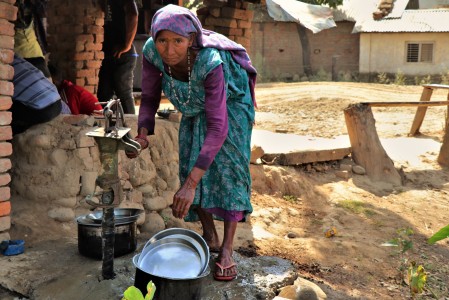
In a study of water projects in Western Nepal, Stephanie Leder and Floriane Clement found that community dynamics impacted planning processes. As a result, more marginalized and disadvantaged women are less likely to benefit from improved water supplies.
As small-scale irrigation becomes a viable option for improving farmers' resilience to climate shocks in Africa and Asia, decisions about access and use are made at the household level. How can equal governance of these water resources be ensured?