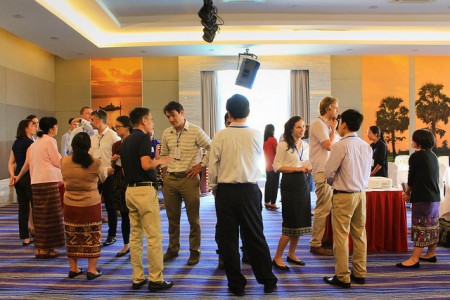
"The Greater Mekong Forum serves as the primary interface between the technical work produced by WLE Mekong and potential users of that work," Kim Geheb discusses his thoughts on the forum.
Green infrastructure involves making conventional urban infrastructure more sustainable, cost effective, and resilient to climate change. But implementing such techniques, in less well-planned cities in Southeast Asia may prove to be more difficult than in western cities.
Publicly accessible satellite data gives water accounting a boost with the ultimate goal of being able to give water managers precise indications of where and when water is being “used” and allow them to plan accordingly.
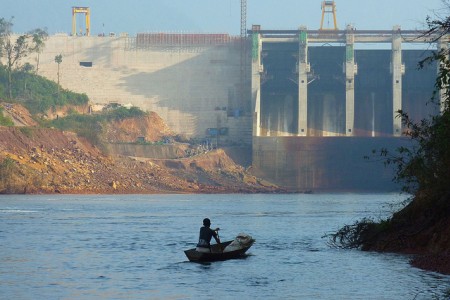
In the Mekong Region, fast flowing rivers are often the lifeblood of nearby communities. They provide food, transportation, irrigation and spiritual needs. But a fast flowing river is also an opportunity to generate hydropower. To offset the ecological effects, could artificial wetlands benefit dam-side communities?
On this Thrive podcast, we discuss water rights with Tim Williams and Alan Nicol of IWMI. What are the consequences of leaving water out of large-scale land acquisition agreements? And what about another type of human right: the right to water for crops?
Many farmers long ago turned to groundwater pumping to cope with water supply shortages. But how much energy do we use to access this water source? The answer has remained something of a mystery — until now.
Hovering over almost all of the discussions at Stockholm World Water Week was the question of climate change, and one of the few aspects of climate change we can be absolutely certain about is that things are going to become more variable. Claudia Ringler and Jeremy Bird join us on this episode of Thrive Podcast.
Just over a year ago, delegates from the United Nations produced the first agreed set of Sustainable Development Goals for the world. Among the SDGs, which are meant to end poverty and sustainably steward the earth's natural resources, the critical role of water has repeatedly emerged during the negotiations.
Managing transboundary river basins is a huge challenge. Even if there are no overt tensions between countries, local communities and national governments tend to act out of self-interest.
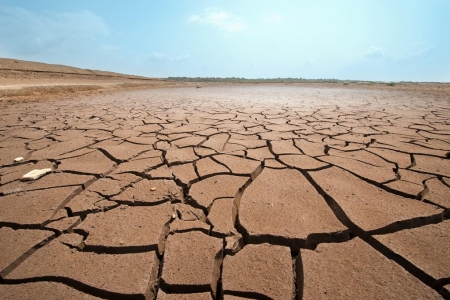
Droughts and floods cost us hundreds of billions of dollars each year in food loss and property damage. What’s worse? The costs stand to rise as water variability increases in many parts of the world.
Foreign direct investment in African agriculture could bring great benefits, but there are risks too. Nowhere is this more true than in sub-Saharan Africa where, for many, land ownership is still seen as the key to a secure income.
New innovations are revolutionizing the measurement of water productivity. Farmer Ahmed may not know it yet, but he is a water productivity champion in Morocco.