The best available data on municipal wastewater production, collection, treatment, discharge and direct use for irrigation purposes is continuously collected and added to AQUASTAT, the FAO global water information system.
Targeting AGwater Management Interventions (TAGMI) is a decision-support tool that predicts the probability of success for scaling out agricultural water management technologies for smallholder farmers.
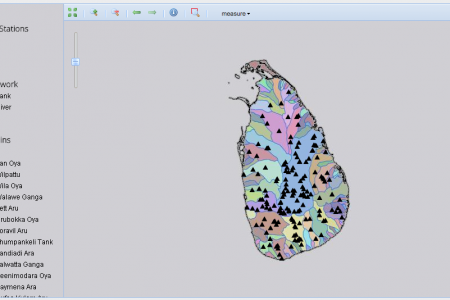
Researchers from the International Water Management Institute have developed multivariate power-law models for estimating streamflow metrics in ungauged areas, using easily obtained catchment characteristics.
The irrigation technique known as partial root-zone drying has proved to hold the potential to increase water use efficiency without significantly reducing yields.
Researchers from the International Livestock Research Institute and Colorado State University has developed a model, called G-Range, which allows decision makers to carry out global analyses of native rangelands and the changes they may undergo.
The investment visualizer tool is for policy makers and investors and may help them to assess various investment opportunities. Users can examine the profits, costs, yield improvements, number of people reached, area expansion and water use consumption of various smallholder water management options by country and region.
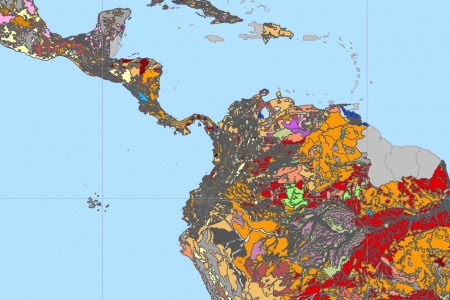
The Africa Soil Information Service provides continent-wide digital soil maps and decision-support applications for sub-Saharan Africa, using new types of soil analysis and statistical methods.
IWMI used an integrated management support tool called GRiMMS to assess and map the groundwater drought risk in the Southern Africa region. Groundwater drought risk refers to diminished groundwater access and availability.