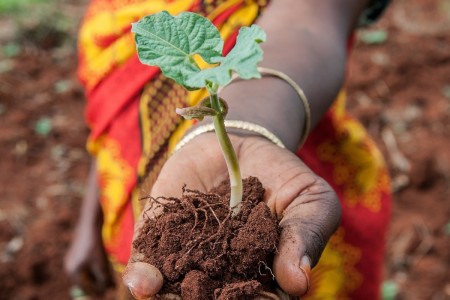
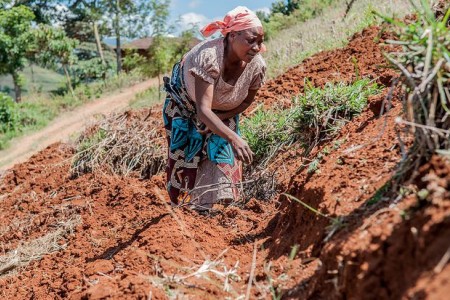
The latest episode of the Thrive podcast takes a close look at the ground beneath our feet. Soil, on which terrestrial life depends, is often ignored precisely because it is everywhere and yet invisible.
What are we to make of the proliferation of water funds around the world? Now there’s a question. Would they still be growing in number if they weren’t delivering tangible impacts? Many interventions lack fundamental scientific principles to support them, so the answer in some cases may well be yes. Which is why it is vital that they get the science right.
In celebration of the International Year of Soils, we asked a number of experts: Can poor farmers afford to invest in restoring degraded soils? Read their responses.
Development practitioners are faced with a conundrum: how to measure results, and satisfy donors’ and funders’ demand for impact reporting, when the typical three-year development project has long expired by the time impacts emerge?
The Tana-Nairobi Water Fund is a public-private scheme uniting big business, utilities, conservation groups, government, researchers and farmers. It aims to increase farm productivity upstream, while improving water supply and cutting costs of hydropower and clean water for users downstream, and is designed to generate US$21.5 million in long-term benefits to Kenyan citizens, including farmers and businesses.
It looks like the triple bottom line might be gaining headway in the development sector. Despite the long-standing schism between Wall Street investors and environmental or social activists, the two sides are starting to find common ground at the increasingly popular landscape intersection.
Constantly monitoring where and when problems occur allows health professionals to predict potential trouble spots and target their interventions. It is perhaps surprising then, that other challenges to our wellbeing do not always receive such close attention. Take soils for example.
For big decisions, like buying a car, we may do a bit of research; but most of the time, we simply follow our gut feeling as a guide. But do we want those who make decisions on some of the biggest issues in development to also follow their gut instinct? Decision analysis tools can improve the decision making process.
The homogenisation of global food supplies, and therefore of agricultural fields, makes agriculture more vulnerable to major threats like drought, insect pests and diseases, which are likely to become more severe as a result of climate change.
In most of the Asian river basins, economic growth and pressure on rivers and water resources is quite recent. Asia’s rapidly growing urban footprint is one of many threats that makes urban river management particularly challenging in many cities.